

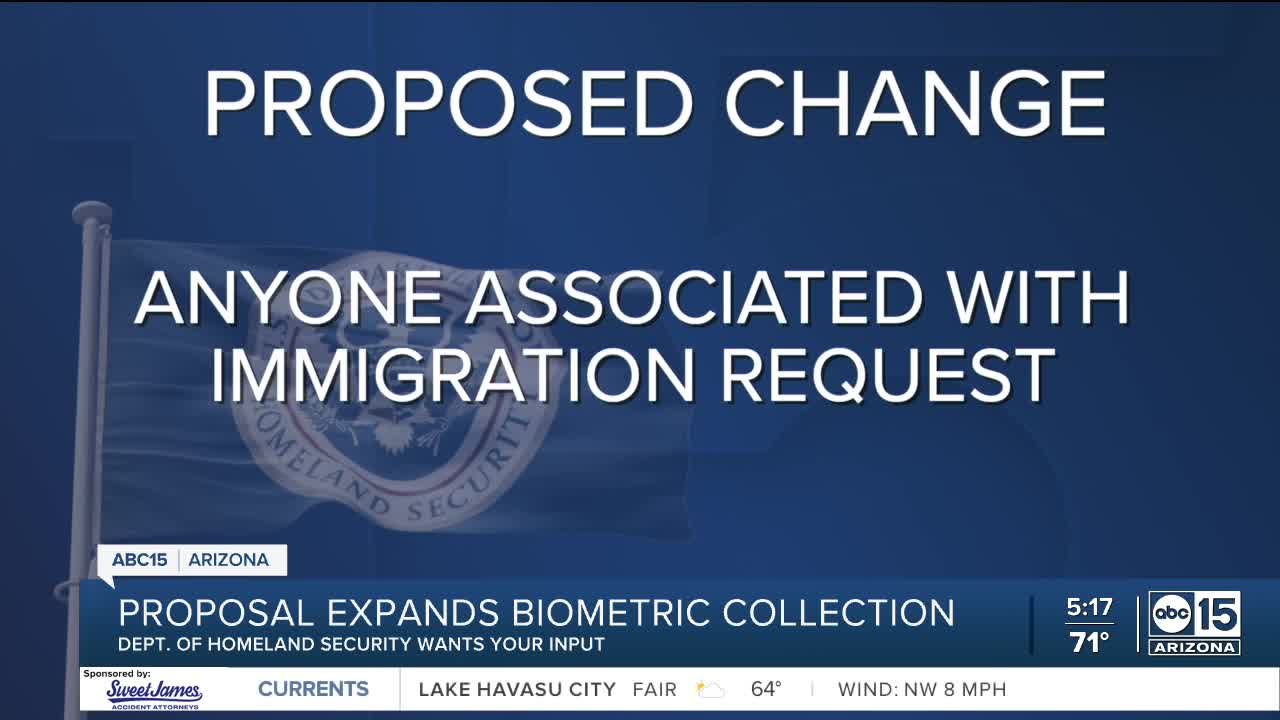


PHOENIX — The Department of Homeland Security is proposing a sweeping expansion of how biometric data is collected and used in immigration cases, a move that could require some U.S. citizens, children, and family sponsors to submit biometric information for the first time.
The proposed rule, published by U.S. Citizenship and Immigration Services (USCIS), would significantly broaden both who must provide biometrics and what types of data the government can collect, compared to current immigration procedures.
Under existing policy, biometric collection is largely limited to noncitizens applying for certain immigration benefits and typically includes fingerprints, photographs, and signatures.
The new proposal would allow USCIS to require biometrics from any individual associated with an immigration benefit request, including petitioners, sponsors, parents, spouses, dependents, and signatories — even if they are U.S. citizens or lawful permanent residents.
The rule would also expand the definition of biometrics beyond fingerprints and photos to include facial images, voice prints, eye scans such as iris or retinal imagery, palm prints, and DNA or DNA test results in some circumstances.
Another notable change would eliminate current age-based exemptions, allowing biometric collection from individuals of any age, including children.
DHS also proposes what it calls “continuous vetting,” meaning biometric data could be used to recheck eligibility and conduct background screenings throughout a person’s immigration lifecycle, rather than only at specific application stages.
In the proposal, DHS says the changes would improve identity verification, reduce fraud, and strengthen national security. However, public feedback by thousands are raising civil liberty concerns over the dramatic expansion of government data collection with limited guardrails on storage, reuse, and long-term oversight.
The proposal is not yet final. DHS must review public comments before deciding whether to implement the changes.
The public comment period ends tonight, giving the public a final opportunity to weigh in on the proposal.
People can review the full proposal and submit comments directly through the Federal Register link here.

