

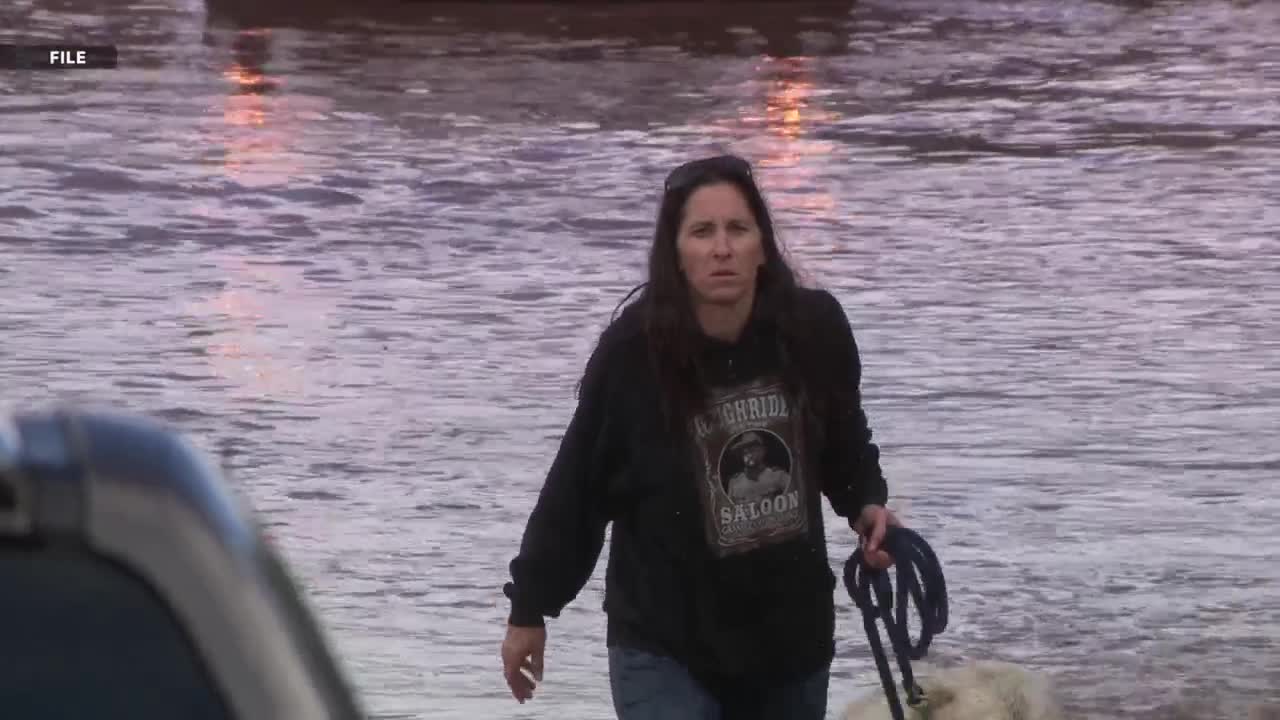


VERDE VALLEY, AZ — A group of volunteers is working to help the Verde Valley recover from flooding earlier this month, covering the cost until there's more emergency funding.
Since destructive flooding began Nov. 1. volunteers from across the area have helped their neighbors dig out in Clarkdale, Cottonwood, Camp Verde, Rimrock, the Lake Montezuma area, Cornville and Sedona.
"We have been working 18-hour days. I'm up till 3:45 every night and up again at 6:00, monitoring the group, checking in with people whose house is flooded, checking in with people who want to volunteer, trying to find out what the local agencies are doing and what services are available," said Mira Bai Fairlight, who lives in Cottonwood.
Fairlight created a Facebook group in early November to share needs and resources and to connect people with volunteers who can help them. The 'Verde Valley Helps 2026 Flood Victims' group now has more than 3,600 members.
On Tuesday, volunteers had their first field safety training session. Nicholas Rhine, with the Disaster Response Development Coalition, said the session also covered how to muck out homes and lead teams.
Rhine, who lives in Phoenix, said he came across Fairlight's Facebook group while offering help to disaster relief groups. He reached out to her and was in the Verde Valley within 24 hours.
"We saw the need, the immediate need to get safety training in so that volunteers could get back into homes safely. They were hesitant to continue going into the homes when they realized the threat that was present when everything started getting worse with the mold," Rhine said.
Fairlight said volunteers have paid for the work themselves as they wait for federal aid. She said they use their own gas money to take laundry back and forth, cook food from their own freezers for people, buy diapers and medicine, and put people up in hotels.
As the volunteers continue their efforts, Yavapai County and state officials gave updates at a public meeting in Camp Verde on Friday.
"We will continue to bring organizations together, identify needs that remain, coordinate available resources, and work with our partners to support the communities impacted by the flood. The emergency response may be winding down, but recovery is far from over," said Ashley Ahlquist, Yavapai County's emergency manager.
Officials said disaster funding will still take time. Britton Holdaway, interim director of the Division of Emergency Management, said the state can help local governments pay to repair public infrastructure.
He noted that it can't give money directly to homeowners, which is why the state is seeking a federal declaration that would include individual assistance.
"There are a lot of steps that are involved in this process. It does take time. We try and expedite it as much as possible in coordination with FEMA, but at the end of the day, there are certain steps that have to be completed by statute in order for us to achieve that," Holdaway said.
Fairlight, who also spoke at Friday's meeting, said she's trying to connect with elected officials about the group's work.
"I think that meeting, when all the agencies were explaining what they had been doing and kind of their perspective, it made it sound like everything's under control, and it is not. And the people in the community are frustrated and tired, and we feel alone, and we feel unsupported, and we really want the city and county and state officials to be in the Facebook group with us."
The steps to get federal disaster funding are still in progress. As of Tuesday, Yavapai County Emergency Management said the state was compiling and reviewing damage assessments for the governor. That's Step 4 of the federal disaster declaration process.
State officials said Friday they planned to get a draft request to the governor by Wednesday. The governor will then decide whether to formally request a federal disaster declaration.
