

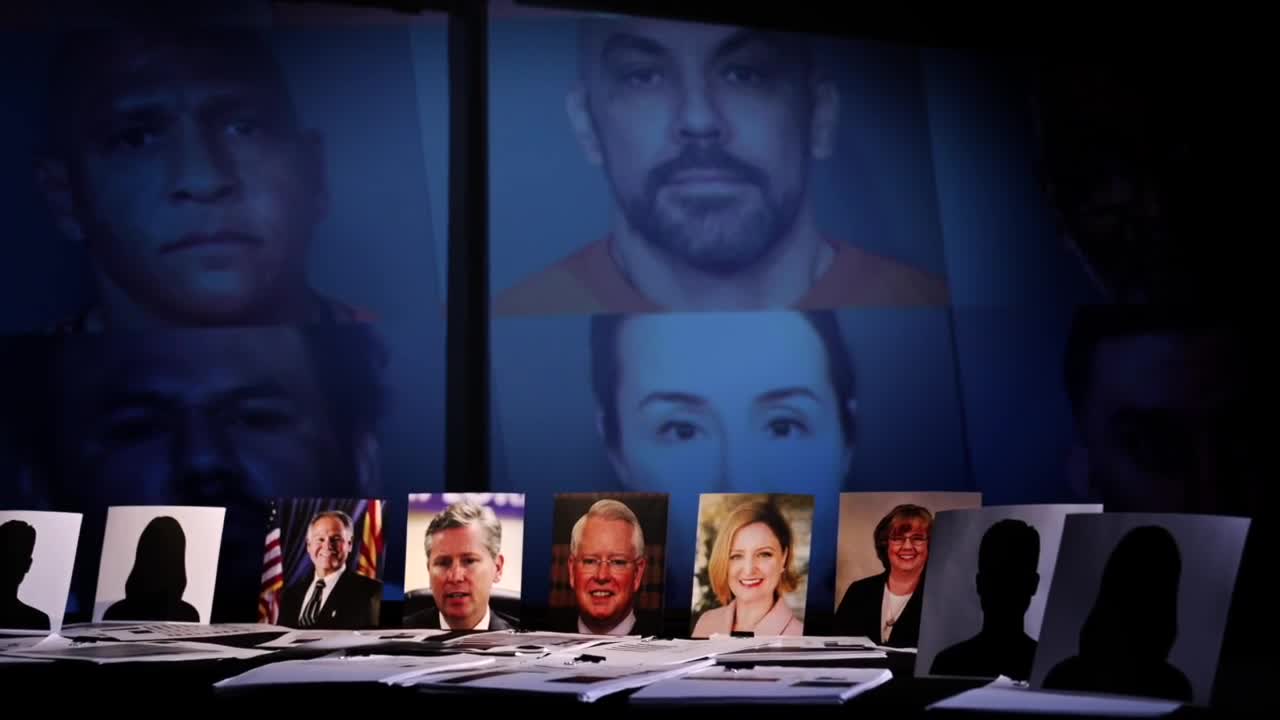

What happened: Judge Jennifer Green, who oversees the Maricopa Superior Court’s criminal department, has quietly rolled out a program to facilitate quicker resolutions to death penalty cases in Arizona’s most-populous county.
The court has begun issuing orders for the prosecution and defense to participate in settlement conferences two years after a notice to seek the death penalty is filed, according to a statement from the court. The orders are meant to “encourage” settlement talks in capital cases, which often drag on for many years only to end with prosecutors reducing the charges.
Court officials said current and retired judges will conduct the hearings.
Why it’s happening: An investigation by ProPublica and ABC15 Arizona in June found that prosecutors in the Maricopa County Attorney’s Office have frequently pursued the death penalty but rarely secured death sentences.
In nearly 350 such cases over 20 years, just 13% ended in a death sentence. The outcomes raised questions about the office’s judgment in pursuing the death penalty, said former Maricopa County Attorney Rick Romley, who called for a review of capital charging decisions after the news organizations shared their findings with him.
“Once you allege death, the whole game changes,” Romley told ProPublica and ABC15 at the time. “So many more resources go into that particular case.”
Capital cases can be litigated across the terms of multiple county attorneys and cost more than a million dollars each to prosecute. In the hundreds of Maricopa County death penalty cases pursued since 2007, the cost of furnishing the accused with an adequate defense alone has totaled $289 million. That figure did not include the costs of the prosecution, which the county attorney’s office said are not recorded in a way that can be tracked separately.
Romley applauded the court for implementing the settlement conferences. “The courts have recognized this isn’t the right way to be doing this,” he said, adding that the orders could speed up other aspects of the cases, such as discovery. Victims could also benefit from quicker resolution, he said. “If I was county attorney, I would be embracing it,” he said.
Arizona resumed executions in 2025 after a two-year pause. Gov. Katie Hobbs, a Democrat, in 2022 ordered a review of the state’s lethal injection process, but she dismissed the retired federal magistrate judge she had appointed to conduct the analysis after he determined that lethal injection is not humane, he said.
There are 107 people on Arizona’s death row.
What people are saying: Rosemarie Peña-Lynch, director of public defense services for Maricopa County, said in a statement that public defenders are committed to a process that “offers an opportunity to explore potential case resolutions while safeguarding the constitutional rights of our clients.”
Maricopa County Attorney Rachel Mitchell, a Republican, said at a news conference in November that she is “for anything that would speed up this process.” But, she added, prosecutors seek death in cases “where we think the death penalty is warranted.”
Asked about holding settlement conferences two years into such cases, she said: “It’s not typically a situation where the death penalty is dropped … on a whim of a plea agreement. It’s dropped because maybe evidence changes, or, for example, witnesses die, or something like that. Whether it will help or not, I don’t know, but if it does that’s great.”
What’s next: Last month, Green issued an order in a death penalty case to schedule a settlement hearing within two years. Green’s order, in a case against two men accused of murdering a Tempe woman, cites a criminal procedure rule mandating capital cases be resolved within 24 months of the state’s notice to seek death.
On Dec. 3, Mitchell announced that her office would seek the death penalty against
Cudjoe Young and Sencere Hayes, who were previously charged with the April 17, 2023, murder of 22-year-old Mercedes Vega. Young and Hayes have pleaded not guilty.
An autopsy report showed Vega, who was still alive when she was left in a burning Chevrolet Malibu, died of blunt force injuries and had been shot in the arm. A medical examiner also found bleach in her throat, according to ABC15.
“We will continue to pursue justice for Mercedes Vega and her family,” Mitchell said in a statement.
