

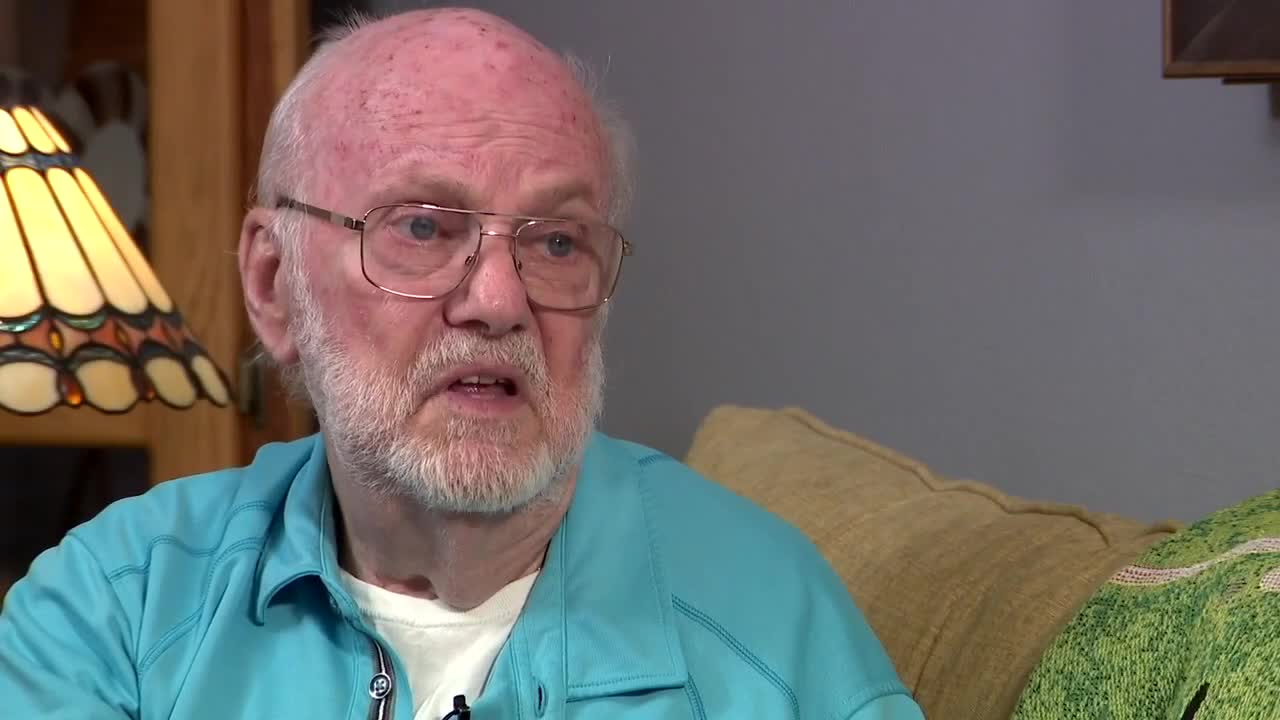


An Arizona Navy veteran who helped support the U.S. military response to a 1966 nuclear accident in Spain believes he unknowingly ingested radioactive contamination during the operation and is now fighting for disability benefits decades later.
Bob Garvy was serving in the Navy when his ship was diverted to the Mediterranean after a U.S. Air Force B-52 bomber collided with a refueling aircraft over southern Spain near the village of Palomares. The crash scattered wreckage and four hydrogen bombs across land and sea. Two of the weapons ruptured on impact, releasing plutonium dust that contaminated nearby farmland, including tomato fields.
“There’s been a crash, bomber crash, and we’re going to this little town in Spain,” Garvy recalled of being rerouted to the area.
About 1,600 U.S. military personnel took part in the cleanup operation, which ran from January to the spring of 1966. Air Force and Army units focused on recovering the weapons and removing contaminated soil, while Navy ships supported operations offshore.
Garvy said his ship remained anchored off the coast for weeks as concerns grew over the economic impact on the region’s agriculture, particularly its tomato crops.
According to Garvy, military officials purchased large quantities of locally grown tomatoes and encouraged sailors to eat them publicly to reassure residents that the produce was safe.
“We’re going to bring aboard bushels and baskets full of tomatoes,” Garvy said his commander told the crew. “We would like for you guys that like them, feel free to grab them and eat them, because we’d like you to be seen eating these things to show the people that they’re safe.”
At the time, Garvy said, neither he nor other sailors questioned whether the tomatoes could have been contaminated.
“I didn’t even think. We never gave it a thought,” he said. “They said they’re safe.”
Garvy now believes he inhaled and ingested radioactive particles during the operation. He has since been diagnosed with degenerative disc disease and believes there is a direct connection between his condition and exposure during his deployment to Palomares.
“Now I have degenerative disc disease, which was diagnosed by Barrow downtown,” Garvy said.
U.S. and Spanish authorities removed contaminated soil and crops from the Palomares area following the accident, and long-term monitoring programs tracked radiation levels in the environment and local population. For decades, however, veterans who participated in the cleanup struggled to have radiation exposure formally recognized for benefits purposes.
That changed in August 2022, when the Department of Veterans Affairs, following passage of the Honoring our PACT Act, officially designated participation in the Palomares cleanup as a radiation-risk activity. The change allows qualifying veterans to seek presumptive service connection for certain radiation-related conditions.
Dr. Carl Forkner, a national service officer with Disabled American Veterans, has assisted Garvy with his disability claims and appeals for the past three years.
“Ionizing radiation exposure has been documented to cause degenerative bone diseases,” said Forkner.
Still, Forkner said the VA’s current rules limit which conditions qualify for presumptive benefits, forcing veterans like Garvy to continue appealing.
“They cite two specific disabilities and then caveat that by saying the radiation levels documented by Air Force studies don’t warrant presumptive disabilities for a number of other radiological exposure conditions,” Forkner said. “And that’s what we’re still fighting.”
Forkner said he remains hopeful the case will eventually be resolved, though time is a concern.
“I’d like to think there’s an end to this,” he said. “I would love to think that there’s an end to this before there’s an end to him.”
For Garvy, the long delay in official recognition of radiation exposure leaves him uncertain whether a final decision will come soon enough to matter.
“It took decades just to acknowledge what happened,” he said. “I don’t know if I’ll see the end of it.”

