

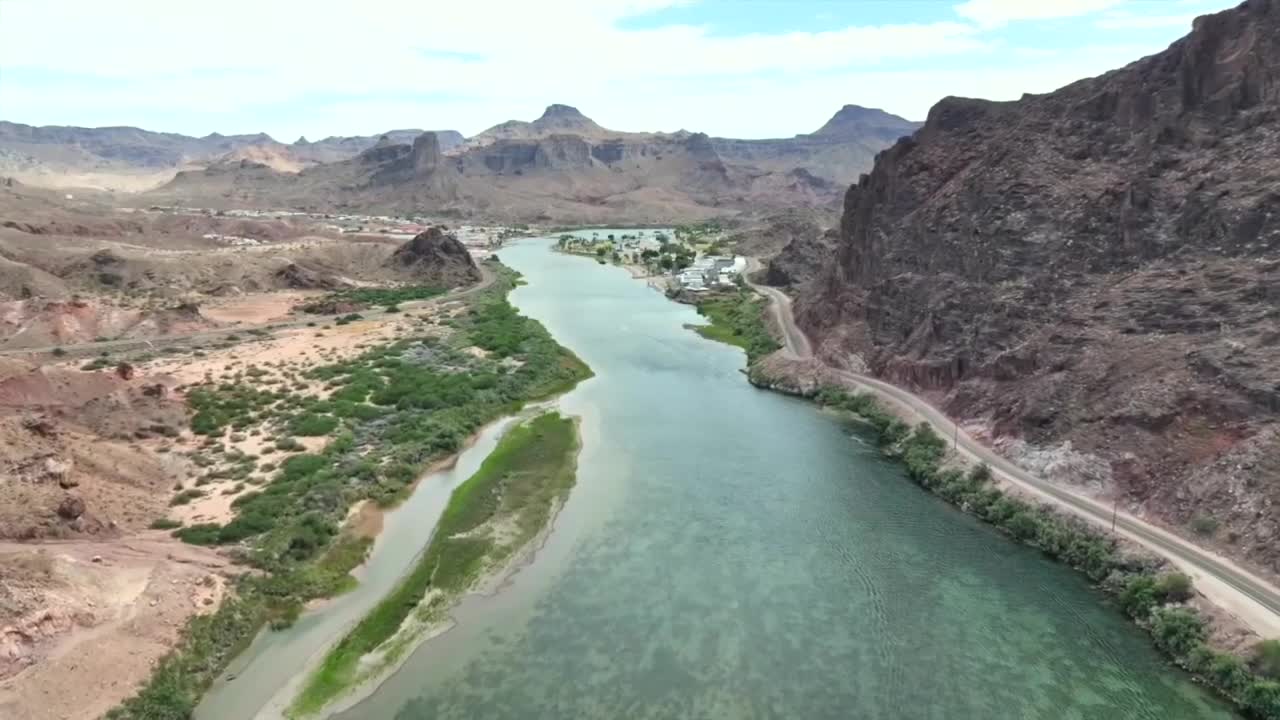


PHOENIX — The Arizona Department of Water Resources confirmed the federal government has requested more time to respond to a lawsuit challenging its new Colorado River management plan.
Arizona and the Central Arizona Project have moved to join Nevada's lawsuit against the U.S. Department of the Interior, challenging a plan that could significantly reduce the amount of Colorado River water delivered to Arizona.
The legal battle comes after the seven states that share the river failed to reach an agreement on how to manage its increasingly limited water supply.
Tom Romero, a law professor at the University of Nevada, Las Vegas, believes the lawsuit could be about more than stopping future cuts.
"It's just creating more pressure to get the each of the states, in particular the upper basin states, to come to the table and to agree to some cuts," Romero said.
Why the states remain divided
Arizona, California and Nevada make up the Lower Basin, while Colorado, Utah, Wyoming and New Mexico make up the Upper Basin.
A major sticking point is whether Upper Basin states should be required to reduce their water use.
Romero says those states argue they have never used their full allocation under the 1922 Colorado River Compact and have already taken steps to conserve water.
Romero believes the lawsuit could increase pressure on those states to compromise, but warns that the strategy carries risks.
"I don't think any of the states want this to go to courts, because then it's out of every state's hands, right?" Romero said.
Interior Secretary Doug Burgum has also warned against allowing a judge to decide how Colorado River water is distributed.
Romero said the dispute could potentially reach the U.S. Supreme Court, depending on how the case develops.
A century-old agreement and a shrinking river
Beyond the legal battle, Romero believes the states may eventually need to reconsider the 1922 Colorado River Compact itself.
The agreement was developed when officials believed the river could reliably provide more water than it often produces today.
Romero suggested replacing fixed water allocations with a system based on percentages of the water actually available.
Such a change, he said, could better reflect the river's changing conditions.
But a lawsuit won't put more water in the Colorado River.
"I think this winter is going to be telling," Romero said. "If the predicted amount of moisture comes, I think it's a little bit of a release valve."
For now, water leaders are hoping a strong winter snowpack in the Rocky Mountains can offer some much-needed relief.
