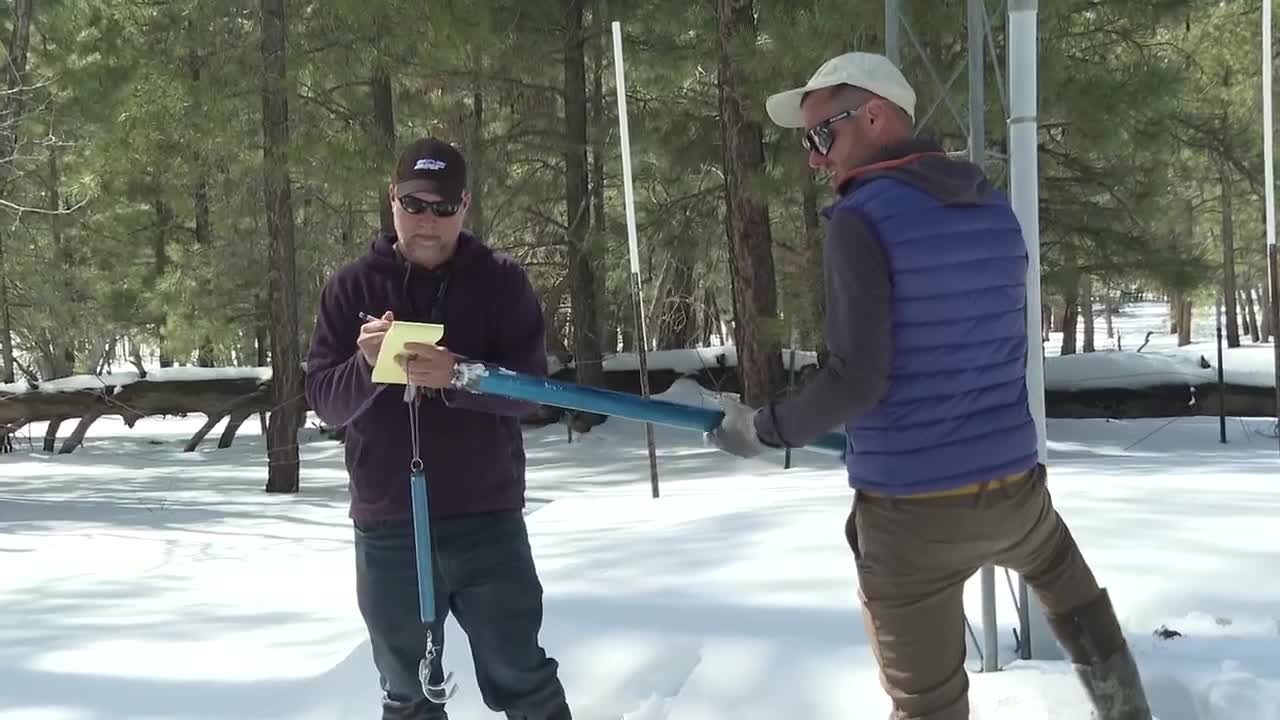


After weeks of troubling signs across the West, a series of powerful winter storms has delivered a much-needed boost to the region’s struggling snowpack.
From the Rockies to the Sierra Nevada, much of the West has been dealing with a winter snow drought. For much of the season, snowpack in some areas sat at just 20 to 40 percent of normal, a concerning figure for a region that relies heavily on mountain snow for its water supply.
Snowpack acts as a natural reservoir, slowly melting in the spring and summer to feed rivers, reservoirs, and communities downstream. This year’s deficit has raised fresh concerns about the future of key water sources, including Lake Powell and Lake Mead, both of which remain well below average levels that can trigger water shortages.
A Boost From February Storms
Over the past week, powerful storms swept across the West, dropping several inches and in some Sierra Nevada locations even feet of snow.
The impact is visible in snow water equivalency, or SWE, a measurement that calculates how much liquid water is stored in the snowpack.
On February 13, before the storms moved in, snow water equivalency in the Lower Colorado River Basin was just 26 percent of normal. By February 19, that number had climbed to 51 percent.
In the Upper Colorado River Basin, SWE increased from 58 percent on February 13 to 65 percent by February 19.
While those gains represent significant short-term improvement, both basins remain at just slightly more than half of what is typical for this time of year.
Across the West, data show that prior to the storms, zero basins were at or above 100 percent of average snow water equivalency. After the storms, only two basins have reached or exceeded that mark, leaving the majority still below normal.
High Stakes for Colorado River Negotiations
The snow deficit comes at a critical time.
Leaders from seven Western states remain in negotiations over the future management of the Colorado River. A February 14 deadline to reach a new agreement passed without a deal, leaving uncertainty about how water shortages will be handled moving forward.
Arizona holds junior water rights along the Colorado River, meaning it could face deeper cuts if reservoir levels fail to recover.
Water experts say the remainder of February and March will be crucial. Additional late-winter storms could help narrow the deficit, but as spring approaches, precipitation typically shifts more toward rainfall than snow, limiting further snowpack gains.
For now, the recent storms offer cautious optimism. But with snowpack still well below average in key basins, the West’s water outlook remains uncertain.
Want more news in your community? Add ABC15 as a preferred source on Google below: