

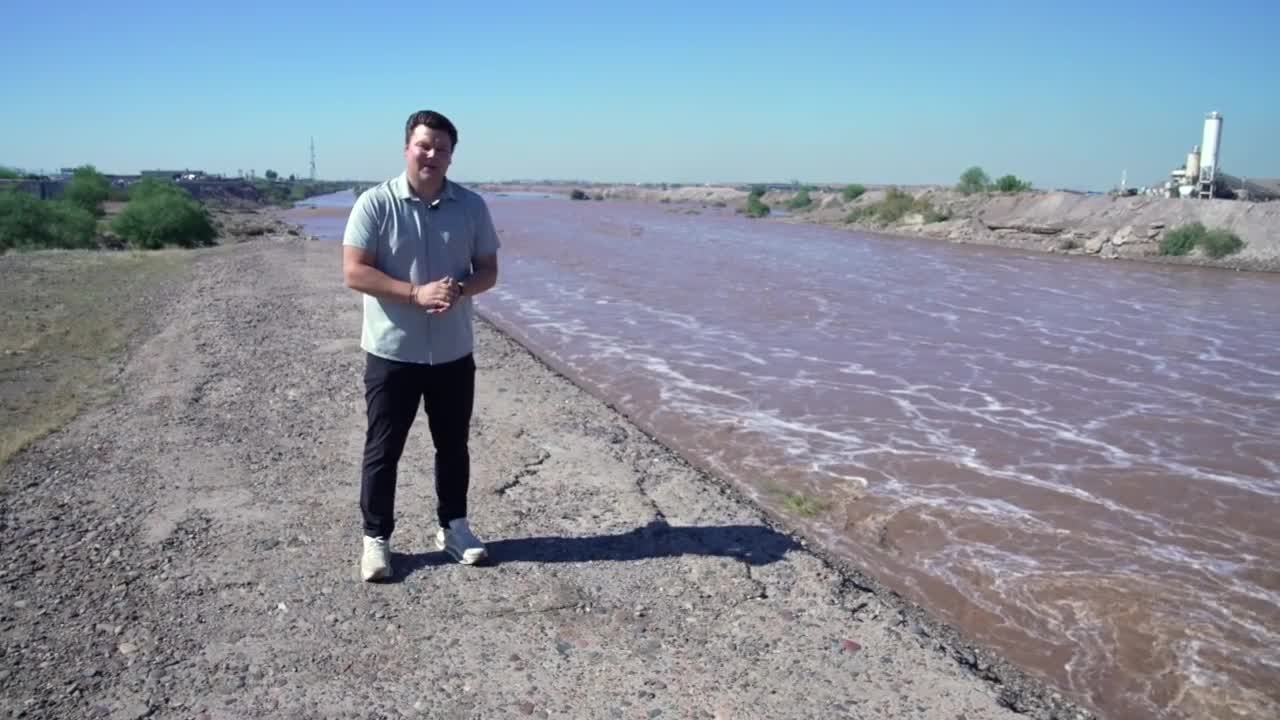


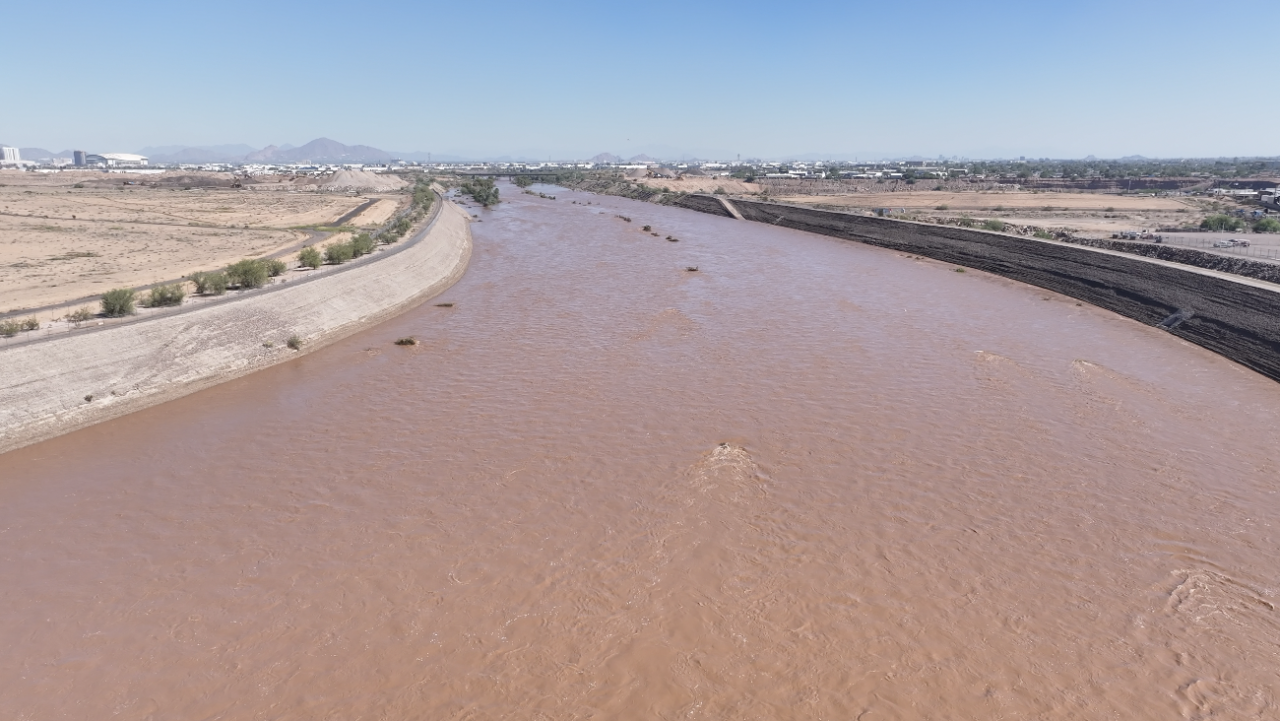
PHOENIX — Historic rainfall across Arizona is creating a rare sight in the Valley. The Salt River is rushing, carrying thousands of cubic feet of water per second through the Phoenix metropolitan area.
The storms have delivered a significant boost to Arizona's water supplies, but they've also created flooding concerns as water makes its way downstream toward Painted Rock Reservoir near Gila Bend.
According to Salt River Project (SRP), Arizona received so much rainfall that reservoirs were at risk of overflowing.
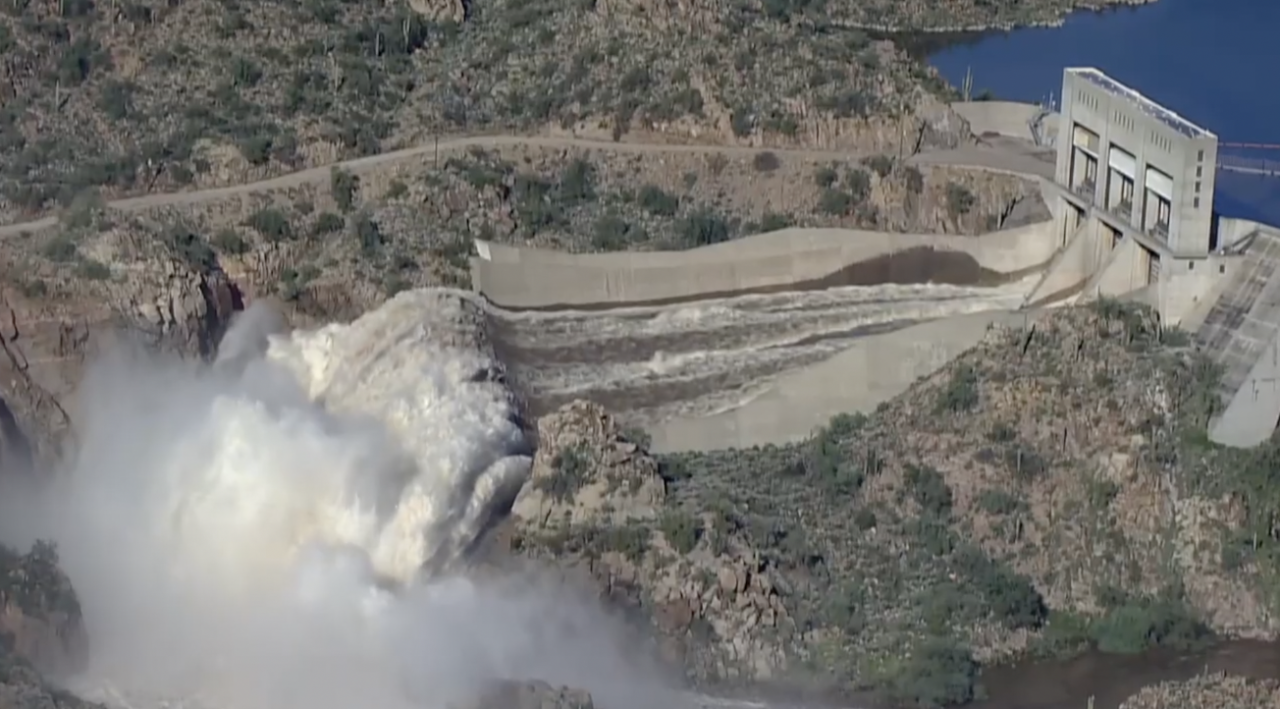
"We had to release it so that water didn't go over the top," said Bo Svoma with SRP. "So we had big flood concerns on one side, and big water savings benefits on the other."
The releases are being closely monitored by the Maricopa County Flood Control District, which works to reduce flood risks across the Valley.
"Our goal is to capture that water before it gets into major metropolitan areas, control it, release it in a way that it's not flooding, but runoff that can be in a channel or stream," said Daniel Henz with the district.
Much of the water flowing through the Salt River eventually makes its way toward Painted Rock Dam, southwest of Phoenix near Gila Bend.
Unlike reservoirs designed to store water for drinking or irrigation, Painted Rock Reservoir is primarily a flood-control facility.
The reservoir is typically dry, but during major storms it can temporarily hold large amounts of floodwater, helping protect downstream communities along the Gila River. It is operated by the U.S. Army Corps of Engineers.
"There won't be long-term storage in Painted Rock Reservoir," Svoma said. "It will just hold back that water for flood concerns."
SRP has been exploring projects to expand the Valley's water storage capacity, including improvements to existing reservoirs and infrastructure.
One significant effort involves Bartlett Dam on the Verde River, where SRP and its partners are studying a project that could increase the reservoir's storage capacity by raising the dam.
The proposed expansion would allow more water to be captured during wet periods and stored for use during future droughts, rather than having to release as much excess water downstream.
For now, SRP says the recent rainfall has provided a welcome boost to its reservoir system.
"That definitely helps, and if we get a couple storms like that again this winter, our system could be totally full," Svoma said.
Storms farther north have also helped raise Lake Powell's water level by more than 10 feet since September, providing a boost to one of the Colorado River system's two major reservoirs.
A substantial winter snowpack in the Rocky Mountains, where much of the Colorado River's runoff originates, would provide a much more meaningful boost to the system.
