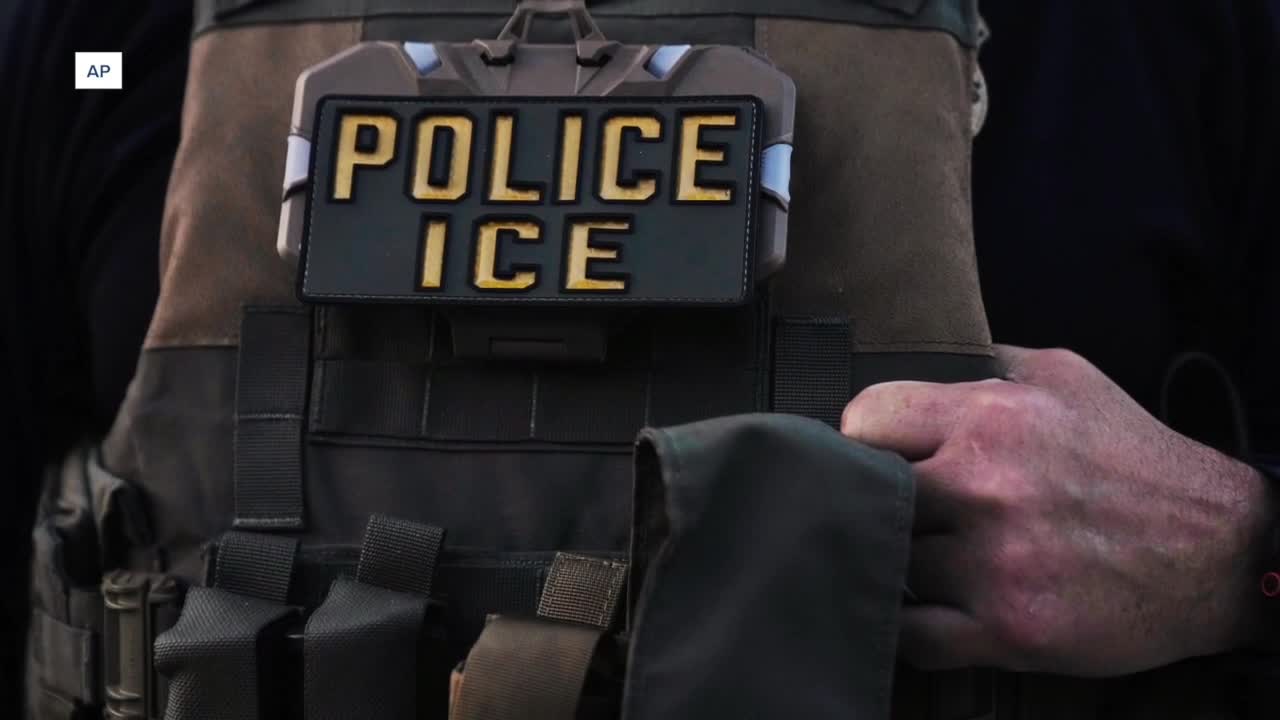


PHOENIX — Across the Valley, immigration enforcement remains top of mind. A Navajo man says he was detained by ICE agents in Peoria last week, despite having several forms of ID on him. He is now opening up about that experience to ABC15, as tribal leaders say this emphasizes the need for Native Americans to have IDs that are accepted by ICE.
“Vehicles pulled in. Everything just happened real fast,” Peter Yazzie told ABC15.
Yazzie says he was on his way to work on January 12th when ICE agents stopped him at a gas station in Peoria.
“They just started yelling orders what to do, and I complied with them until after I was down on the ground and zip tied, that's when they told me who they were,” Yazzie said.
Yazzie says he tried to prove he’s a U.S. citizen, telling agents he had documents in his car, including his Certificate of Indian Blood, a driver’s license, and a birth certificate. He says he was still detained.
“The point when I really gave up is when they made the remark about my kids, saying that they're gonna get them, get them next," Yazzie said.
ABC15 first reached out to ICE and the Department of Homeland Security last week, and we kept following up to ask about Yazzie’s case, and the IDs Native Americans need to identify themselves. They have not responded.
DHS previously defended its general operations.
“ICE law enforcement officers have arrested more than 3,000 illegal aliens, including pedophiles, rapists, and violent thugs since Operation Metro Surge began,” Tricia McLaughlin, DHS Assistant Secretary, said in a statement to ABC15.

Do you have a concern in your community or a news tip? We want to hear from you!
Connect with us: share@abc15.com
Tribal leaders say the incident sets off alarms. State Rep. Brian Garcia explains Native Americans cannot be deported under the Citizenship Act of 1924, when Congress guaranteed birthright citizenship to all Native Americans born in the United States.
“It reaffirms that ICE continues to operate outside of the bounds of the law,” Rep Garcia, (D) Tempe District 8, said. "It is pretty bizarre to see ICE engage in sovereign nations and detain when they do not even have the jurisdiction to be able to do anything even remotely like that."
Rep. Garcia says his Pascua Yaqui Tribe is working with the Department of Homeland Security to secure real IDs for members. This comes as Native leaders warn that a Certificate of Indian Blood (CIB) may not be enough during enforcement.
“Right now it is being challenged, and it's being questioned,” Crystalyne Curley, Navajo Nation Council Speaker, said.
Navajo Nation leaders say there’s an urgent need to issue tribal IDs. However, right now, their Office of Vital Records cannot do that due to halted contract funding.
The Navajo Nation President and Council Speaker are both pushing to get that funding in place immediately.
“It’s a safety issue. It's a mental health issue,” Speaker Curley said. " It's triggering a lot of sensitive areas, generational trauma within our people.”
Yazzie says although he only spent four hours in ICE detention, the experience is something that will stick.
“It feels like something's being ripped out of you,” Yazzie said. “Kind of like you're being treated like you're vermin, or like you're a stray dog that is not wanted.”
Several tribes have set up 24/7 hotlines to offer support during ICE Encounters.
Navajo Nation launched this Operation Rainbow Bridge resource page. Their hotline is 855-HELP-ORB (855-435-7672).
The Hualapai Tribe has also established a hotline to report ICE encounters: 928-331-0021.
While Yazzie’s case is raising concern, ABC15 has also spoken to community members and lawmakers who support immigration enforcement.
Last week, Congressmen Paul Gosar and Congressman Abe Hamadeh told us they fully support ICE. We have reached out again to get their thoughts on Yazzie’s case, and will update when we hear back.
Want more news in your community? Add ABC15 as a preferred source on Google below: