




PHOENIX — As hundreds of thousands of Arizonans lose access to food assistance, one Phoenix school district is seeing growing demand for their bi-weekly food distributions while facing new challenges in keeping school meals free for students.
More than 400,000 fewer Arizonans are receiving Supplemental Nutrition Assistance Program (SNAP) benefits, including more than 150,000 children, amid changes to federal eligibility requirements and declining participation as of October.
Arizona has also experienced the largest percentage decline in SNAP participation of any state in the country.
At the Creighton Family Resource Center in Phoenix, the impact of rising food costs and growing financial pressures is becoming increasingly visible.
Every other week, a team of volunteers prepares bags of groceries for families in need.
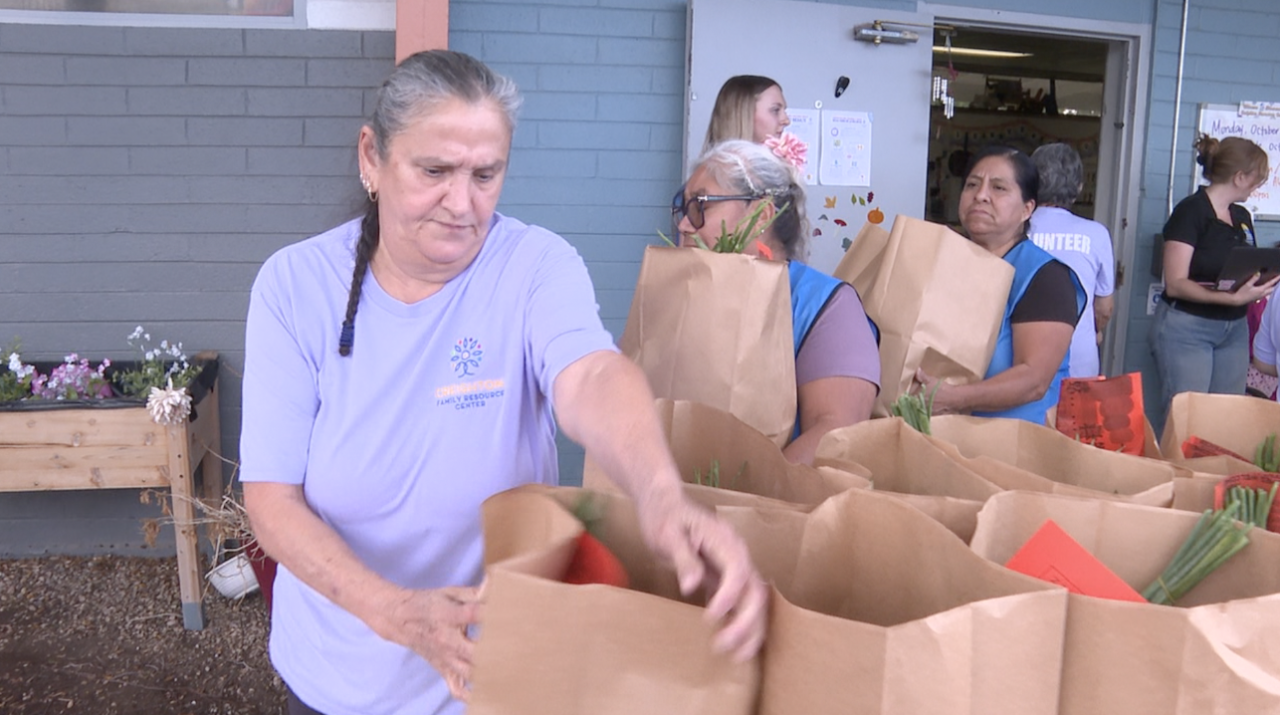
"It has definitely increased," said Kelley Blakslee, who manages the resource center. "We used to do about 50 bags, and now we do 75, and they'll be gone within an hour."
The center has also seen growing demand for emergency food assistance between its scheduled distributions. Blakslee said staff now provide approximately 10 to 15 additional bags of nonperishable groceries each week.
While the center does not ask families about their SNAP eligibility, Blakslee said some have expressed concerns about changes to their benefits.
"People have shared with us that their benefits are changing or that they're worried about them changing," Blakslee said.
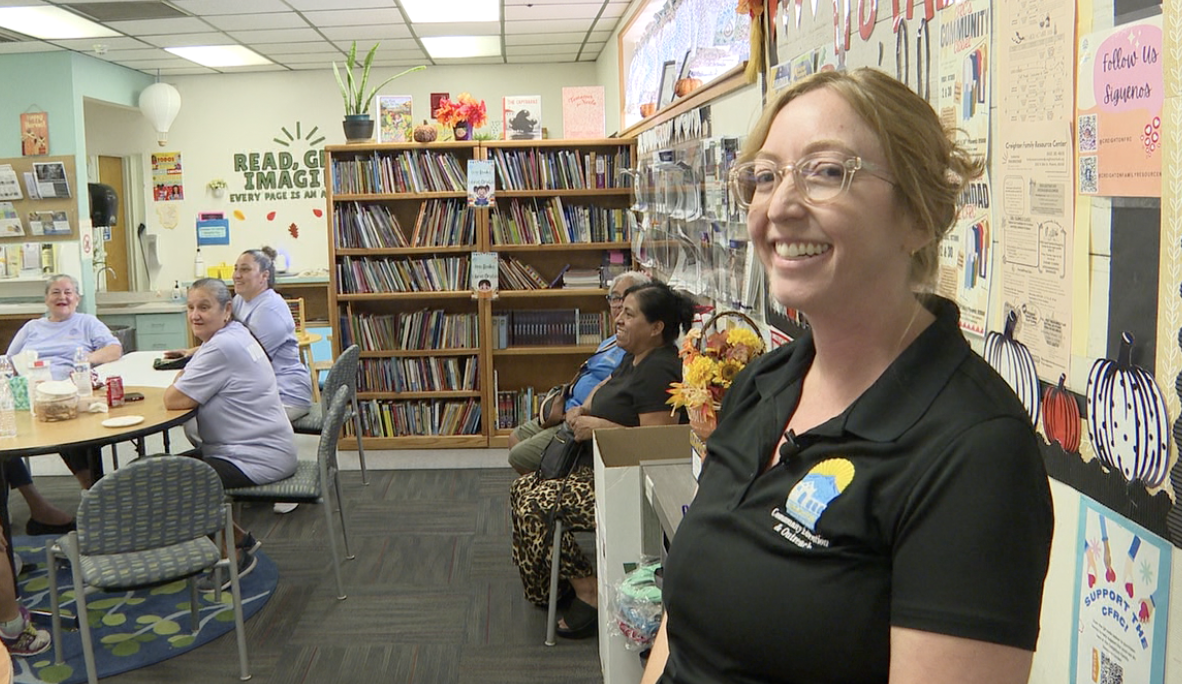
Phoenix mom says grocery bills have tripled
For Marta Gomez, a Phoenix mother of three, the food distributions are helping her family manage rising grocery costs.
"Our grocery bill was maybe 100 bucks a week. Now it's 300, $400 every single week," Gomez said.
Gomez has two children attending schools in the Creighton district and a younger daughter who is preparing to enter kindergarten.
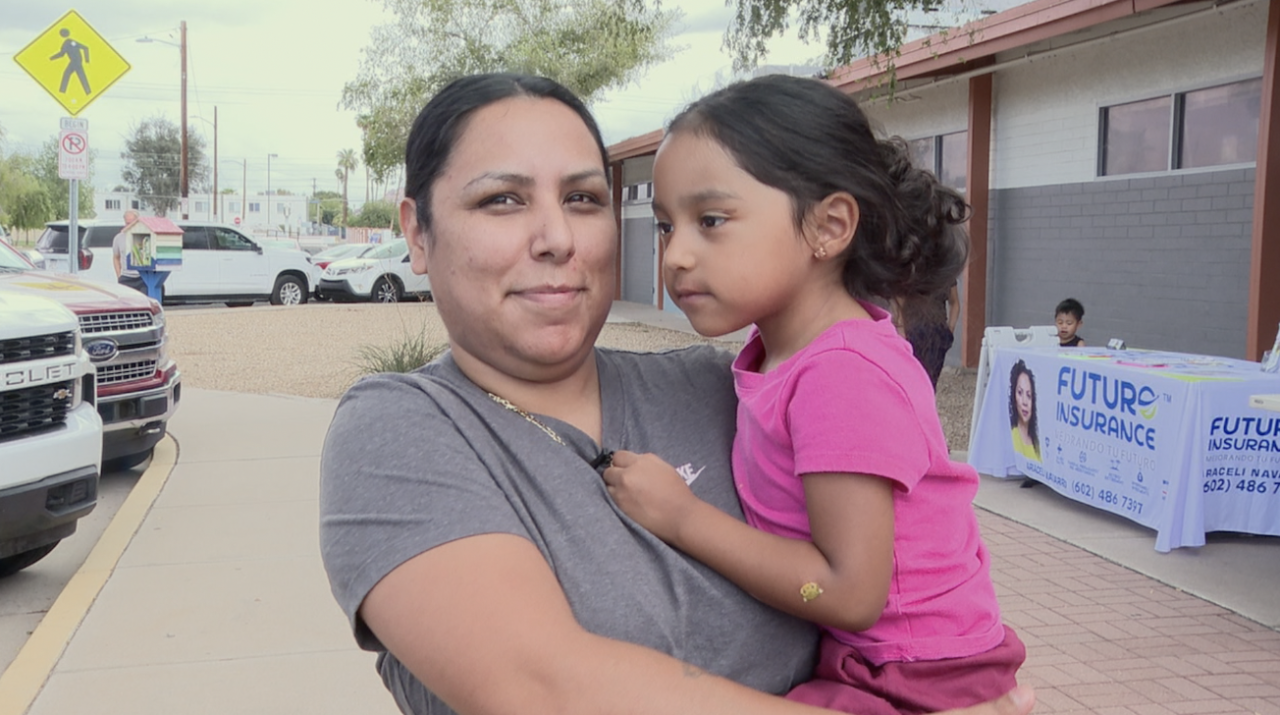
The family visits the resource center for both food assistance and school readiness classes.
"Even that bag, it means a lot," Gomez said. "It helps us with groceries, minimize our bill, and just not spend that much that we don't have."
Beyond groceries, Gomez said she comes to the center as they provide educational opportunities for children who may not qualify for other early childhood programs.
Declining SNAP participation threatens school meal funding
The challenges extend beyond the resource center and into the district's school cafeterias.
Currently, every student at The Creighton Academy can receive free breakfast and lunch through the federal Community Eligibility Provision, or CEP.
The program allows schools serving high-need communities to offer meals to all students without requiring families to complete individual applications for free or reduced-price meals.
However, the amount of federal reimbursement districts receive depends on the percentage of students identified as eligible through programs such as SNAP.
Erin Bronner, the district's director of child nutrition and wellness, said declining SNAP participation is putting the district's current meal program at risk.

"SNAP is the driving factor in making schools eligible to be able to offer the universal free breakfast and lunches that we currently are able to offer our kids here at Creighton," Bronner said.
Under the federal reimbursement formula, districts need an identified student percentage of at least 62.5% to receive reimbursement for all meals at the federal free-meal rate.
Bronner said Creighton's identified student percentage is currently about 5% below that.
While the district remains eligible to participate in CEP, that percentage is too low to receive full reimbursement at the free-meal rate if the district renews under its current numbers.
That could leave the district responsible for covering a significant funding gap.
"If we were to keep CEP but not have our percentage high enough to have 100% free reimbursement rate, the remaining percentage would have to be covered by the district or other funds," Bronner said.
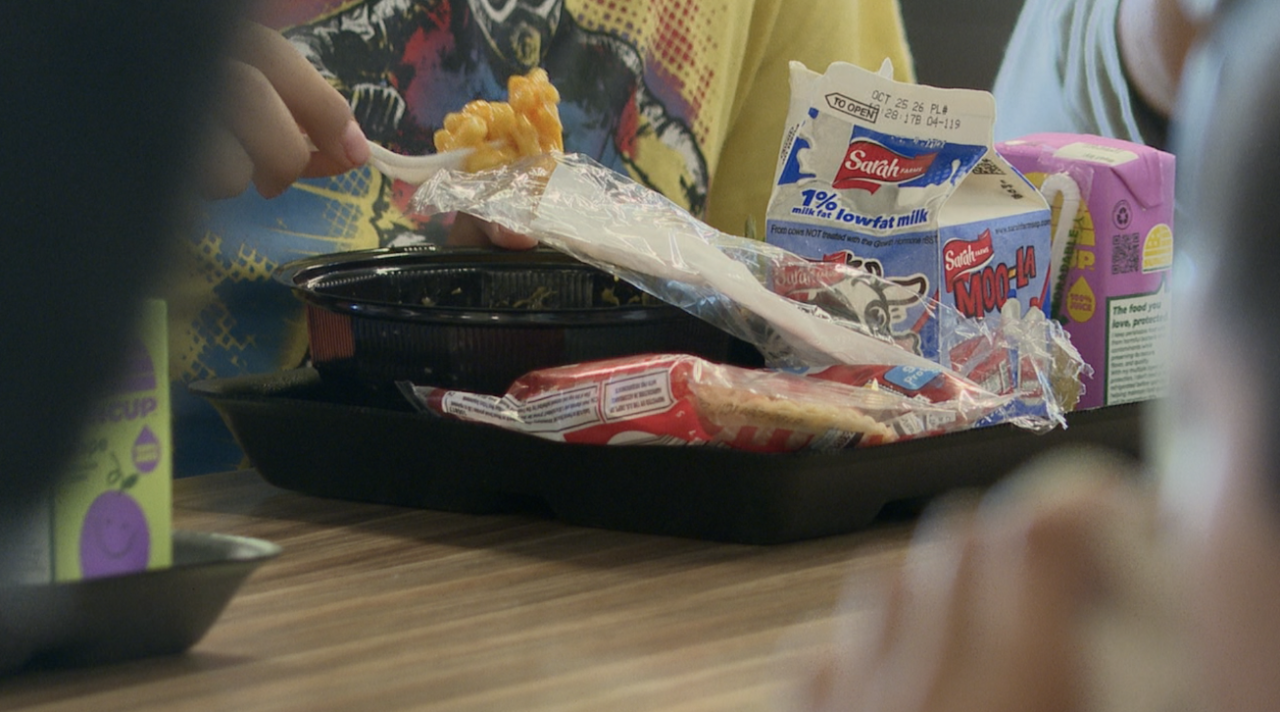
If the district cannot maintain its current program, changes would take effect next school year. Bronner said that the district is exploring other options that could allow students to continue receiving free meals.
"Our district population really hasn't changed. We're still a very high-needs area," Bronner said.
She also noted that free meals eliminate unpaid meal balances and reduce the stigma sometimes associated with receiving food assistance at school.
"The important thing to know is that this is a trickle-down effect," Bronner said. "Families aren't just losing their monthly grocery bill by losing SNAP, they're potentially losing benefits that they see in the school district."
Volunteers say the resource center provides more than food
For volunteers at the Creighton Family Resource Center, the center offers more than a place to distribute groceries.
Liliana Rafael volunteers at the facility and also receives assistance through its programs.
"It helps me mentally to get out, have a good time, laugh and feel comfortable here with everyone," Rafael said in Spanish.
Another volunteer, Mary Barrios, said the center has also played an important role in her family's life.
"Thanks to all those resources, my daughter was able to do many things," Barrios said in Spanish, explaining that school and community programs helped her daughter participate in activities and special trips.
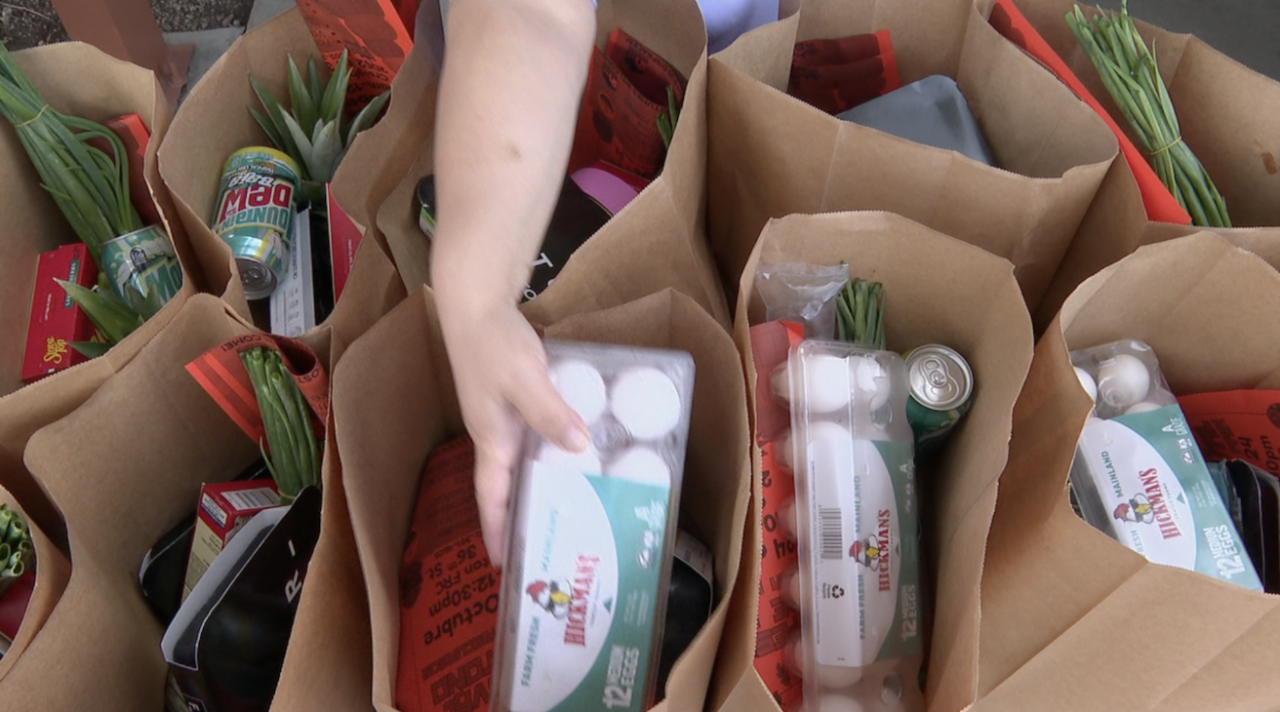
Barrios volunteers by packing groceries, cleaning, organizing clothing and helping with community events.
"I feel satisfied. I feel grateful to the community center for giving us volunteers the opportunity," Barrios said.
She believes centers like Creighton's are especially important as families face growing financial pressures.
"In these difficult times, we have to be grateful that these community centers exist," Barrios said.
A district-wide effort to keep families fed
Back at Creighton Academy, students continue filing into the cafeteria for free meals each school day.
For now, district officials are working to preserve that benefit while the resource center continues meeting the needs of families outside the classroom.
"The importance is making sure that they're fed and nourished and they're ready to learn," Bronner said. "That's our key role for the district."
Families looking for assistance can find nearby resource centers and available programs here.
