

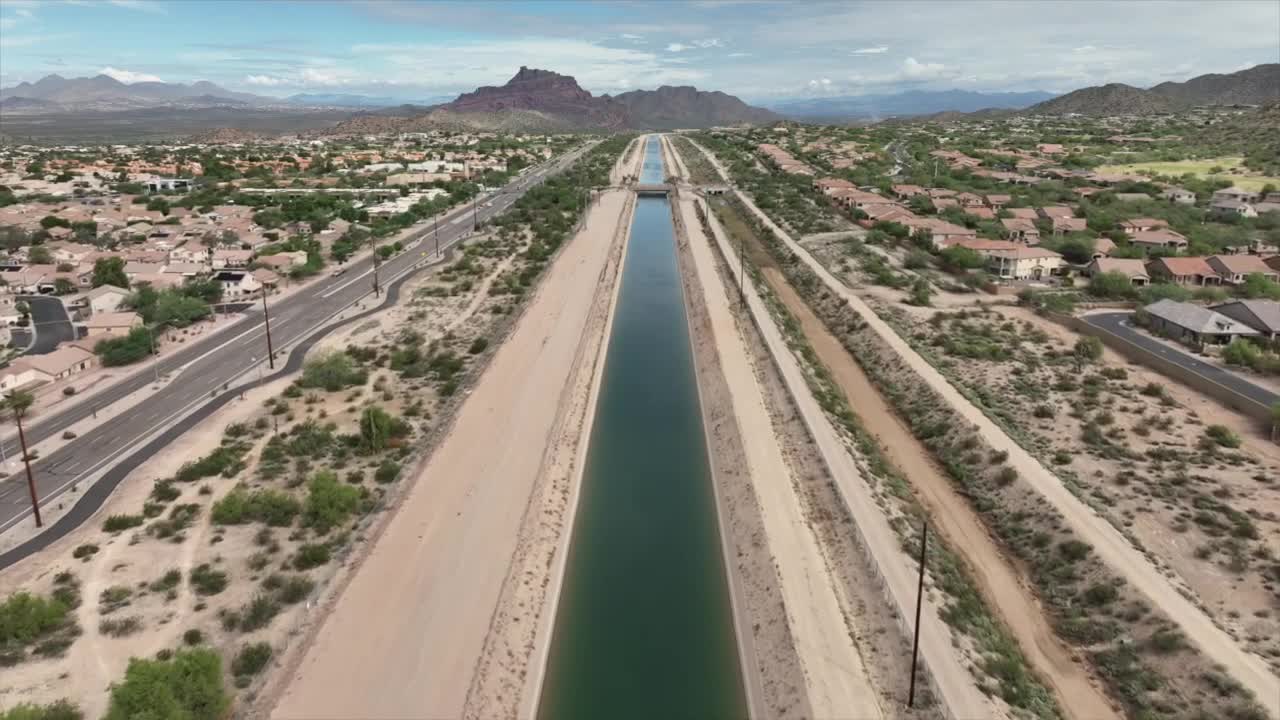


PHOENIX — Arizona enters a new water year Oct. 1 as major changes loom for how the Colorado River is managed and how much water the state will receive in the years ahead.
But Arizona’s water supply won’t immediately drop.
“Our water supplies are not changed for the remainder of 2026,” Arizona Department of Water Resources Director Tom Buschatzke said in a statement to ABC15. “The beginning of the new Water Year, Oct 1, begins a new ‘Lake Powell to Lake Mead’ release pattern. But any impact to Arizona’s water supplies under the new guidelines don’t occur until Jan 1 2027.”
The federal government continues to try and manage historically low reservoir levels in Lakes Mead and Powell. Earlier this year, they authorized a release from Flaming Gorge in Utah to help with water levels.
Under the new Colorado River operating guidelines, Arizona’s reduction would total 760,000 acre-feet starting Jan. 1, 2027, assuming the Lower Basin states implement their proposed agreement for sharing the reductions. That represents roughly 27% of Arizona’s normal 2.8 million acre-foot Colorado River allocation.
Exactly how much less Colorado River water will get to Valley cities is still being determined.
“At this point, Phoenix does not yet have a final, confirmed volume or percentage for how much of that reduction will be reflected in the City’s Central Arizona Project supply,” a Phoenix Water Services Department spokesperson Michael Gertzman said. “CAP has continued to characterize the allocation numbers as provisional while the details are finalized.”
The reductions follow years of Colorado River shortages that have already significantly reduced CAP deliveries to agricultural users in central Arizona. Sarah Porter, director of the Kyl Center for Water Policy at Arizona State University, said while taps won’t go dry, residents could eventually notice the effects in their bills.
“We will be hearing from our water providers, to be as efficient as we can, conserve where we can, and we may see our rates go up,” Porter said.
The federal government’s new approach is also facing a legal challenge. The Southern Nevada Water Authority sued the Department of the Interior in August, asking a federal court to block the new operating plan.
No court date has been set yet in Nevada’s lawsuit.
