

APACHE COUNTY, AZ — Google announced Thursday they're investing $600,000 in a water restoration project here in Arizona.
The money will go to the nonprofit group Trout Unlimited, which is spearheading a number of water projects throughout the region and state, including in the Apache-Sitgreaves National Forests in Apache County and the White Mountains.
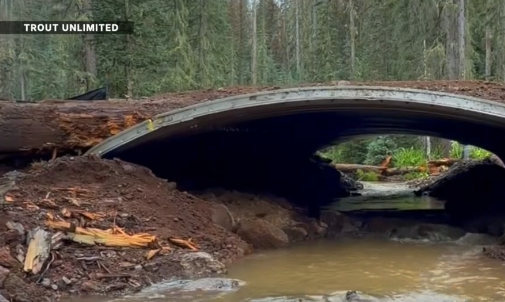
Google is specifically donating towards a project happening in Eastern Arizona area to replace three smaller culverts with larger ones, allowing more water to flow underneath the roadway. The area is seen as an important tributary of the Salt River. Officials say the goal is to improve the natural water flow in the area and re-establish important habitats for the Apache Trout, which was removed from the Endangered Species List in 2024.
"The project is part of our goal to replenish more freshwater than we consume," explains Suzie Shin, who is the manager of data center sustainability programs at Google. "And by keeping more water in the creek, that's how we consider the amount of volume that's benefiting the watershed and staying in the system."
By the year 2030, Google has committed to replenish 120% of the freshwater it consumes with its offices and data centers.
Currently, Google has a data center in Mesa; part of the facility is still under construction but was able to begin functioning within the past year, according to a spokesperson for Google.
In recent months, data centers have been criticized for the amount of water they consume in order to properly cool down. According to a 2025 study from The Environmental and Energy Study Institute, large data centers can use up to five million gallons of water every single day, but Google says its Mesa facility is "air-cooled" and therefore has much less impact on water supplies.
A Google spokesperson told ABC15, "In Mesa, we found the local water source was at high risk of depletion and scarcity, so we opted to air-cool the data center, minimizing our impact on the local watershed. This decision means the facility only consumes water typical of a standard office building (i.e. restrooms or kitchens.)
Google says they also have goals of running 24/7 using carbon-free energy on each of its grids by 2030. They're also trying to reach net-zero emissions by 2030, according to a spokesperson.
To read Google's 2026 environmental impact report, click here.