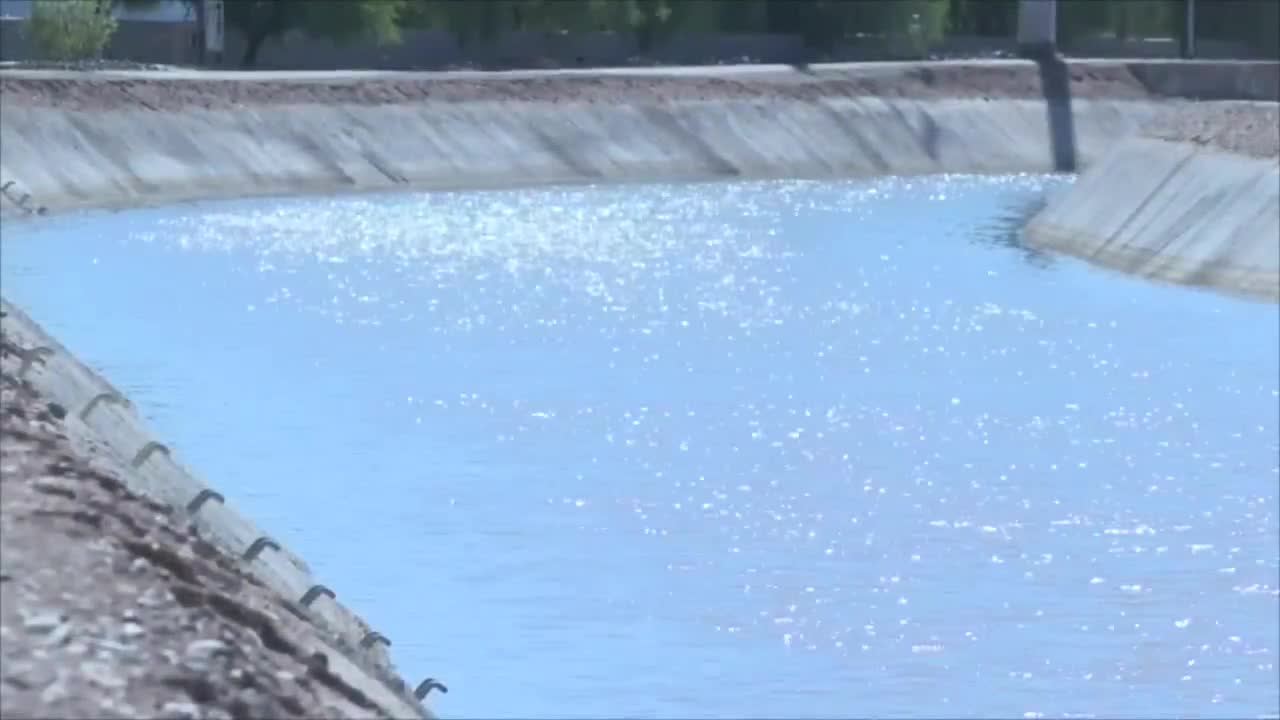


PHOENIX — As water flows steadily through a Central Arizona Project canal, it’s easy to forget just how much effort it takes to get it there, and how much uncertainty now surrounds its future.
Brenda Burman, the general manager of the Central Arizona Project, is responsible for making sure that water gets to your taps.
“We bring in Colorado River water all the way from Parker, Arizona, across the desert, into the valley, and then all the way down past Tucson,” Burman said. “So ultimately, we are bringing water to over six million people and eleven tribes.”
The Central Arizona Project is one of the most critical pieces of infrastructure in the state, with the canal spanning over 300 miles. It is also at the center of high-stakes negotiations now underway over how the shrinking Colorado River will be shared in the future.
The 1963 U.S. Supreme Court decision in Arizona v. California solidified Arizona's right to Colorado River water, which was crucial for approving the project. That system enabled explosive growth across Phoenix, Tucson, and surrounding communities.
To secure federal funding for the canal, Arizona agreed that its CAP water would be the first to face reductions during shortages, effectively placing it last in line for water allocation among lower-basin states.
That knowledge still led Arizona to prioritize conservation, even with the new supply.
“Ultimately, Arizonans are using less water than we did in the 1950s,” Burman said. “We’ve just learned to be smarter about it.”
That conservation push has become even more urgent as the Colorado River continues a historic decline.
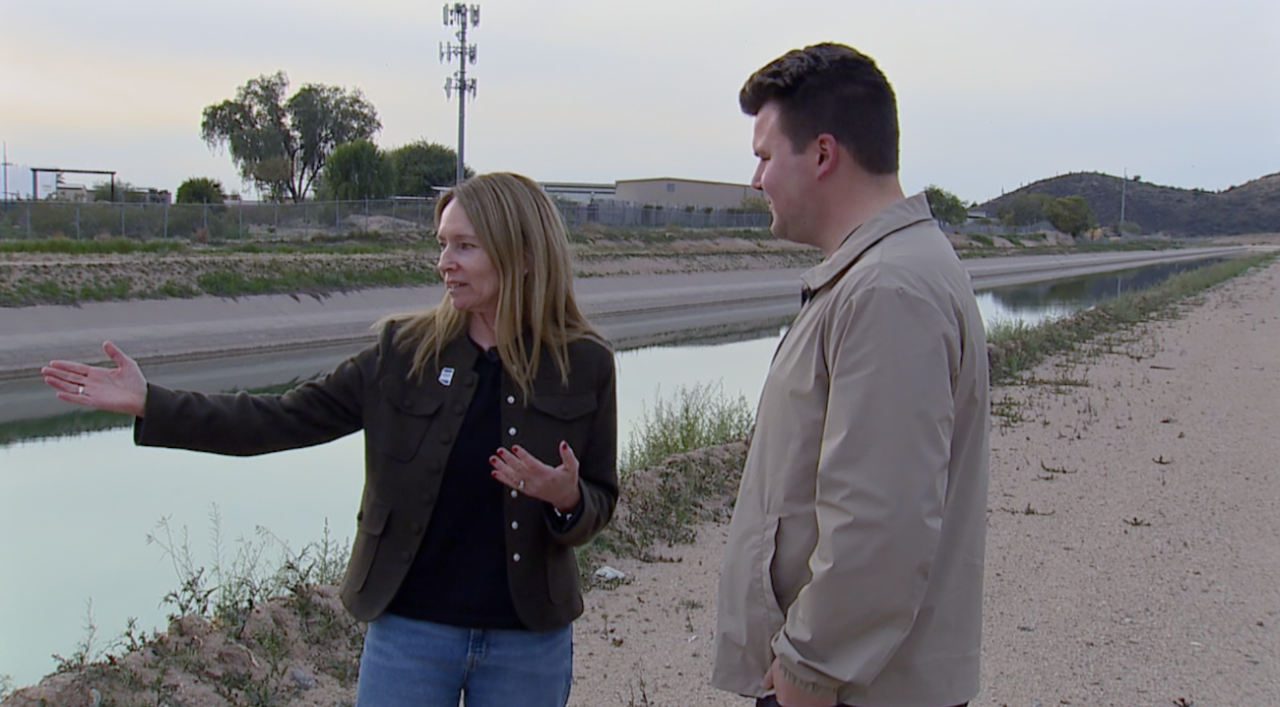
“The Colorado River water is in a 26-year drought and counting, that’s exacerbated by climate change,” Burman said. “What we know, what we’ve learned in these last 25 years, is the river is 20% smaller than it used to be.”
As agreed, Arizona has taken cuts starting this decade.
“That has been our users have taken the hit,” Burman said. “Many of those users have been farmers in Pinal County; it has not been easy, it’s not easy to cut your water use by over a third.”

Do you have a concern in your community or a news tip? We want to hear from you!
Connect with us: share@abc15.com
Now, those cuts could go even deeper. The current agreement on how to share the Colorado River expires October 1, 2026, and so far, the states have been unable to come up with their own deal. Just in January, the federal government stepped in to offer its own plan.
“We’re very disappointed with that document,” Burman said. “If any of those alternatives were implemented, it would be very, very difficult and perhaps devastating for Arizona.”
Some of the plans have Arizona getting as much as a 57% cut if drought conditions continue to worsen.
“I would say we expect to be taking deeper cuts in 2027 and we are prepared to take deeper cuts,” Burman said. “What we’re not prepared to do is to balance the entire river, this smaller river on Arizona’s shoulders.”
The cuts to Arizona have mostly impacted farmers in Pinal County. Burman says Arizona and other lower basin states are doing their part to help, and are asking upper basin states to do the same.
“We can grow and still use less water,” she said. “We’ve learned in the lower basin, whether it’s the Phoenix area or the Los Angeles area or the Las Vegas area.”
Despite the uncertainty and ongoing negotiations, Burman says water managers across the state are focused on reliability, not just today, but decades into the future.
“Water managers have one job in mind,” Burman said. “That is to make sure that the water is flowing and the people who need water are getting it.”
With negotiations ongoing and deadlines approaching, Burman says Arizona’s focus remains on reaching a negotiated agreement, not a federal mandate or a legal fight.
“Our number one goal is to have a compromise solution,” Burman said. “With seven states, the country of Mexico, and the United States.”
“We are willing to do our part,” she said. “But we’re not going to do it alone.”
Arizona Governor Katie Hobbs is expected to travel to Washington, D.C., in the coming weeks as negotiations continue, with states facing a February 14 deadline to reach a deal before the federal government moves closer to finalizing new rules for the river.
This story was reported on-air by a journalist and has been converted to this platform with the assistance of AI. Our editorial team verifies all reporting on all platforms for fairness and accuracy.
Want more news in your community? Add ABC15 as a preferred source on Google below: