

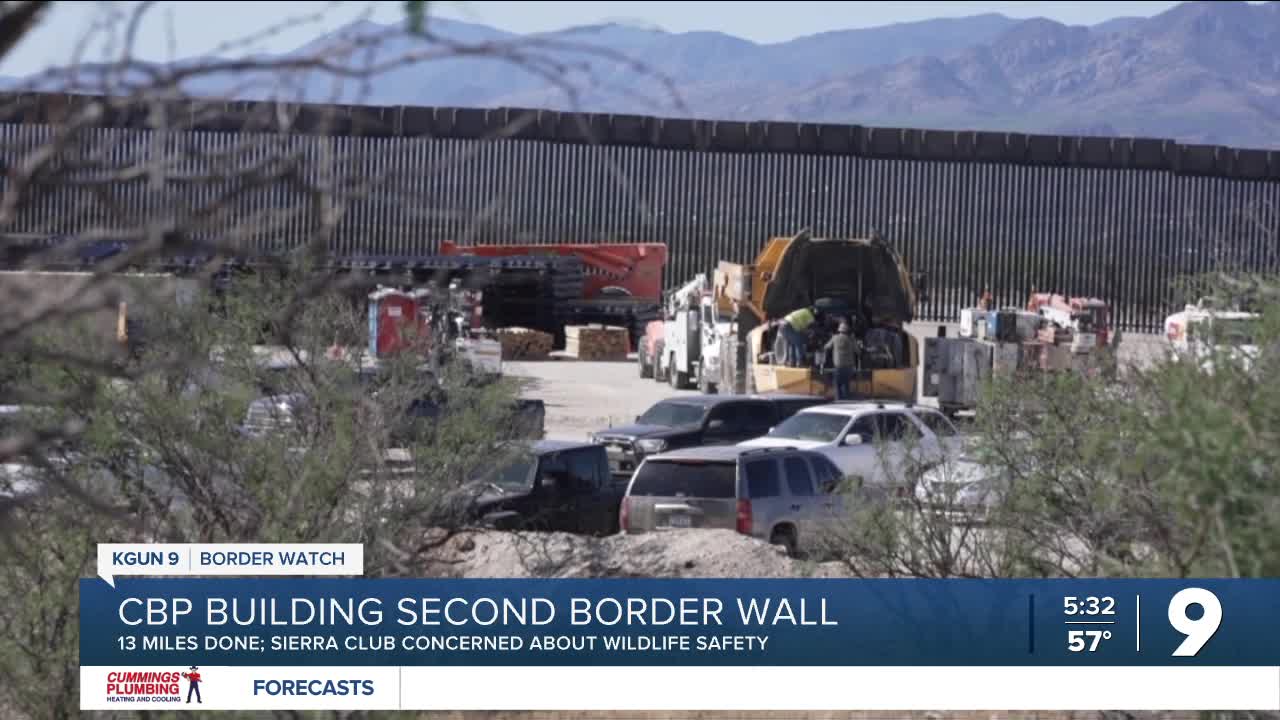


NOGALES, AZ — More than 13 miles of a new secondary border wall have been built along the southern border since Jan. 20, according to U.S. Customs and Border Protection, with more construction now underway in southern Arizona.
Crews are already working in remote areas near Nogales. The second barrier is part of what CBP calls a “Smart Wall,” which will create an enforcement zone.

The project is funded through the One Big Beautiful Bill Act, which includes $46.5 billion for Smart Wall construction. The funding is being used to build new primary barriers, add secondary walls and waterborne barriers, and install system components such as detection technology, cameras, lighting and patrol roads.
CBP says the goal is to create multiple layers that slow crossings and guide people toward ports of entry, where agents can respond more easily.

Secondary barriers are not new. CBP began building them in the San Diego area in 2018, creating space between two walls. Similar plans are now in place for more than 60 miles of border in southern Arizona, including areas between Nogales and Naco and extending toward Douglas.
But, the expansion is drawing some criticism.
“A secondary wall will create a dead zone that will affect most of our public lands,” said Erick Meza of the Sierra Club, a grassroots environmental organization. He said the group has pushed for wildlife crossings in the region and worries animals could become trapped between the two barriers.

“So now if a creature is even able to make it to one of these wildlife passages, it’s going to be trapped in between these two walls,” Meza said.
I reached out to Santa Cruz County Sheriff David Hathaway for a statement.
Neither a primary wall nor a secondary wall is necessary. This is un-American and is a symbol of oppression that harkens back to the oppressive days of the Stasi ruthlessly enforcing the Berlin Wall in East Germany until President Reagan rightfully insisted that the wall be torn down. Americans should be jealous of their freedoms and should realize that Americans are now being searched by American authorities as they leave the U.S. going into Mexico. Walls are ostensibly intended to keep people out, but they can also keep people in.
CBP says that border barriers and related infrastructure remain a key part of its strategy and says tools like its Smart Wall Map track construction and planning along the approximate 1,954-mile U.S.-Mexico border.
Concertina wire is being implemented in some parts. According to CBP, concertina wire is what the military uses. It is designed to snag clothing and prevent somebody from going through it, or to significantly slow them down.
Some of the construction is taking place on Coronado National Forest land. I reached out them asking how construction works on their land.
The Forest Service's role is limited to managing the surrounding forest lands outside the construction footprint and has no approval or decision-making authority over border barrier construction. Temporary closures are in place for certain roads and trails in the border region for public safety and visitors should check the Coronado National Forest website [fs.usda.gov] for more information.
Construction in southern Arizona is expected to continue for the better part of the next two years.
———
Athena Kehoe is a reporter for KGUN 9, she joined the KGUN 9 team in July of 2024 after graduating from Arizona State University. Share your story ideas with Athena by emailing athena.kehoe@kgun9.com or by connecting on X/Twitter.

