



PHOENIX — When Charles “Chuck” Reeves left the U.S. Navy after years of service, he expected the transition to civilian life to be challenging — just not as difficult as it became.
After bouncing between aviation and construction jobs, he found himself without steady work, without a home and living out of his car.
“I’d planned to stay in San Diego,” Reeves said. “But I came back to Phoenix and tried working in aviation and construction. It was hard finding a niche, and as jobs changed, so did my stability.”
The turning point came when Reeves reached out to the local Veterans Affairs office and asked for help — a step he said required swallowing his pride. Within a day, support from U.S. VETS and MANA House, a transitional housing program for veterans, got him off the streets and into stability.
While staying at MANA House, Reeves saw how difficult it was for many veterans to get around the city, even with public buses and light rail. “You still need something around here,” he said. “A bike means independence. If you miss the bus, you can still get where you need to go.”
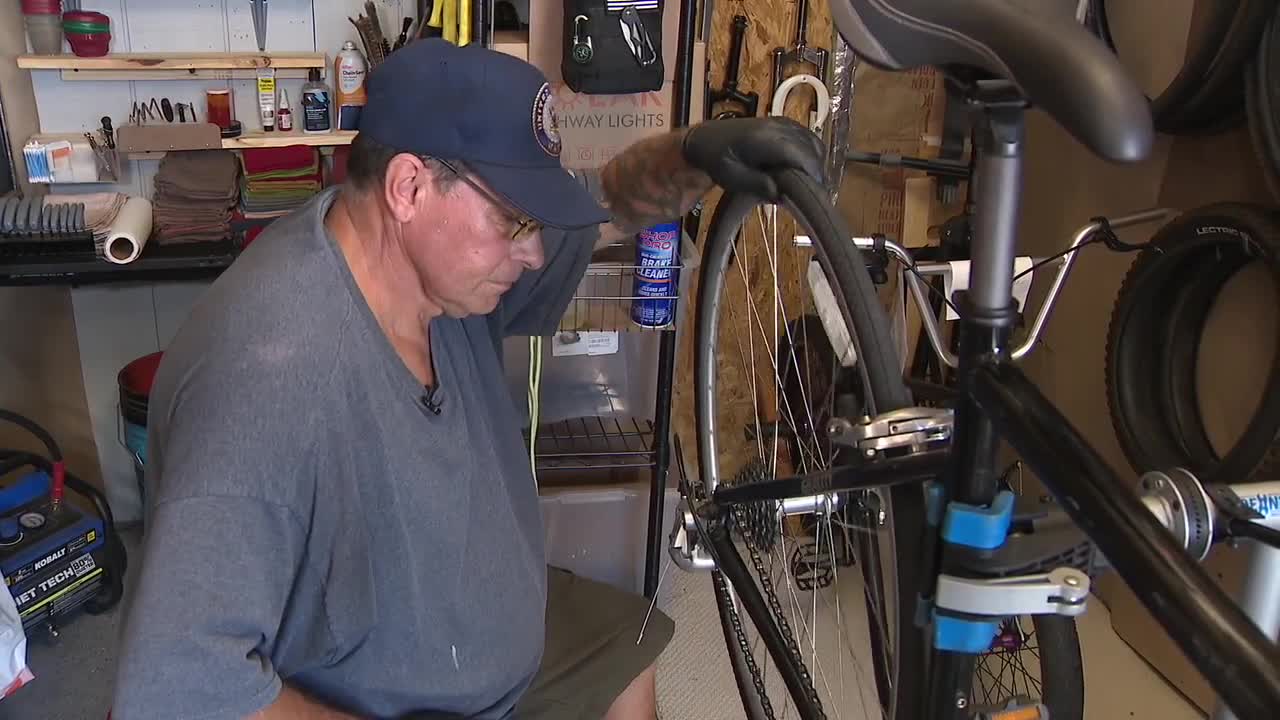
Drawing on a lifelong interest in repairing bikes, Reeves began fixing donated bicycles for fellow residents. What started as a small gesture soon grew into a personal mission. Supported by donations from local bike shops like Bikers Edge Cycle & Fitness in Peoria, he now refurbishes bicycles for veterans who rely on MANA House’s services.
“I’m not out to get rich,” Reeves said. “As long as I can keep going and just help others, that’s what matters.”
For MANA House staff, Reeves’ efforts fill a critical gap. Only about 30% of veterans in the program have reliable transportation, said Rachel Perez, MANA House’s community engagement coordinator.
Bikes can often mean the difference between landing a job, making an appointment or maintaining independence.
“A lot of them struggle with how am I able to pick up my own prescription, attend to my own medical appointments, if I don't have my own means of transportation,” Perez said.
She says what Chuck is doing as a former graduate of the MANA House program is a true sign of a veteran never leaving someone behind.
“Many of our veterans that have been in our program and have graduated really try their best to come back in any way,” Perez said. “Some, like Chuck, are giving back by providing essential transportation.”
MANA House can accommodate up to 76 veterans and is currently housing 62.
The program focuses on helping residents transition to permanent independent living, offering case managers for each participant along with resume support, job training, bicycles for transportation, and donated clothing and computers.
Perez said the need for services continues to grow amid ongoing economic and housing challenges. Once a shelter open to the broader community, MANA House now serves military veterans exclusively to better focus its resources.
“Every veteran here has their own case manager,” she said. “If they need help accessing VA benefits or finding a job, we help with that. We want to make sure they have all the tools to succeed, not just temporarily, but once they leave here.”
Partner organizations and volunteers assist with resource donations, resume-building sessions and peer support. One recent success story involved a veteran who wrote his first resume in the program and is now training in HVAC.
Reeves hopes his work gives others the same sense of stability he fought hard to regain. He continues restoring bikes daily, returning to MANA House with each finished project and delivering mobility — and confidence — one bicycle at a time.
“If everybody felt that same way,” he said, “we wouldn’t have the problems we have nowadays.”
Those wishing to donate to support Chuck’s Outreach Bicycle Repair mission you can email him outreachbikerepair@gmail.com.
