

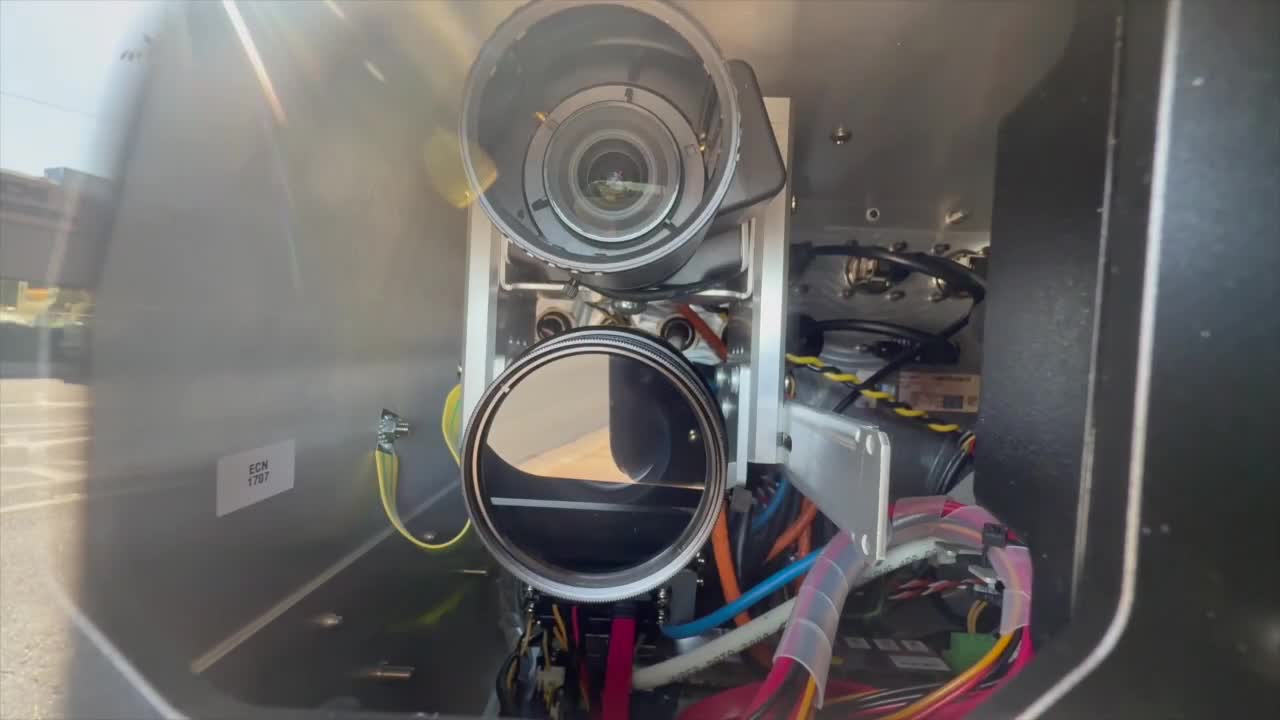


PHOENIX — Arizona voters will decide this November whether to place new restrictions on the use of speed and red-light cameras across the state.
Proposition 319 would change how cities, towns and state agencies can use photo enforcement to enforce speeding and traffic laws.
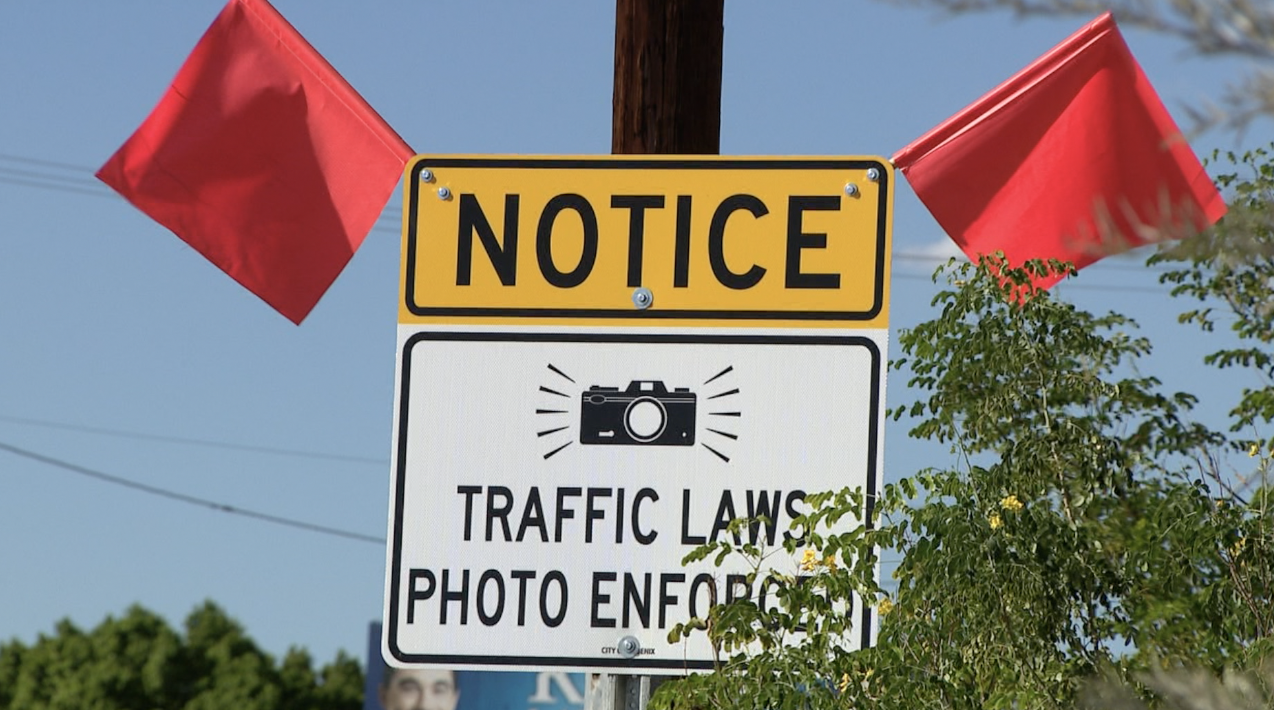
First, local governments that have a qualifying photo-enforcement contract would have to ask their voters for approval at the next general election after the measure takes effect in order to continue operating the program.
If voters approve the program, it could continue for 10 years. Voters would then have to approve it again every 10 years.
If voters reject the program, the local government would have 90 days after that election to stop operating the system.

The second part could have a much longer-lasting impact.
Under the proposition, a local government or state agency generally could not use photo enforcement unless it has a signed contract to operate a system on or before Dec. 31, 2026.
The proposition text specifically states:
"A local authority or an agency of this state may not use a photo enforcement system to identify violators of Article 3 or 6 of this chapter or of a city or town ordinance for excessive speed or failure to obey a traffic control device, unless, on or before December 31, 2026, the local authority or the agency of this state has a signed contract to operate a photo enforcement system."
That means a community without a qualifying contract by the deadline could not simply decide years from now to install speed or red-light cameras. The proposition does not provide those communities with a process to seek local voter approval to start a new program later.
Supporters point to privacy and local control
Marilyn Rodriguez, a Tempe resident who supports Prop 319, said voters should have a greater say over technology used to enforce laws in their communities.
“I think it is good for cities and towns, and for the government generally, to be giving voters the ability to weigh in on the tools that are used to police us,” Rodriguez said.
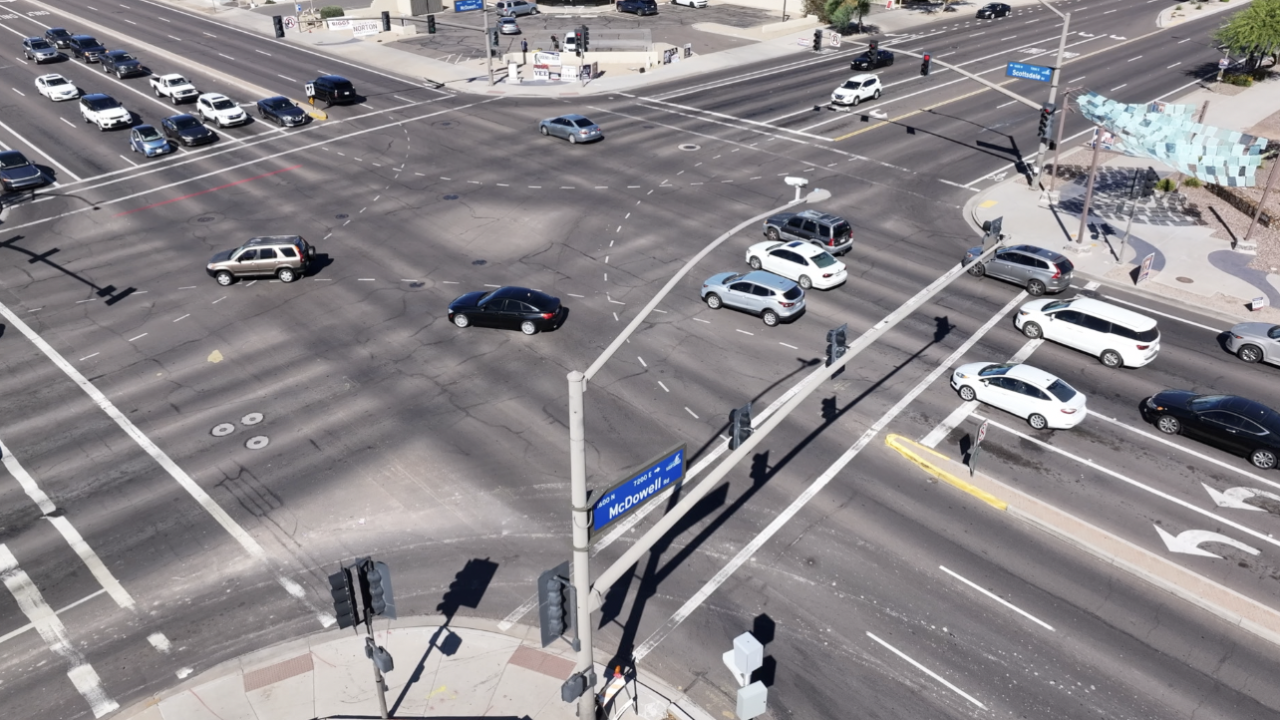
Rodriguez also raised broader concerns about government surveillance and the expansion of technology capable of capturing information about drivers.
“There are certain tools that, when in the hands of police and the hands of the government, are misused and abused over and over and repeatedly,” Rodriguez said.
Rodriguez acknowledged that traffic enforcement can improve road safety, but argued communities have other options available that do not raise the same privacy concerns.
“We don't need to sacrifice privacy for safety,” Rodriguez said. “We can take simple steps like installing more street signs in school zones, and having traffic-calming road designs to make a big difference in traffic fatalities that don’t require us to agree to being surveilled 24/7.”
Opponents question the permanent restriction on new programs
Will Humble, executive director of the Arizona Public Health Association and a former director of the Arizona Department of Health Services, said he does not object to requiring communities with existing programs to get approval from their voters.
His primary concern is the restriction on communities that do not have program contracts by the end of 2026.
Humble said a small Arizona community that has little need for photo enforcement today could grow substantially and face different traffic-safety problems out into the future.
“Is that what growing cities really want, to tie the hands of people 10, 20, 30 years from now?” Humble said.
Humble also says preventing the installation of red light cameras would make roads less safe.
“When you have photo enforcement in place, they know they can't get away with it, and that changes driver behaviors, and those changes in behaviors are what save lives,” Humble said.
What does a yes or no vote mean?
A YES vote would generally prohibit state agencies and local governments from using photo-enforcement systems unless they have a contract in place by Dec. 31, 2026. Local governments with qualifying programs would also have to obtain voter approval to continue using them and return to voters every 10 years.
A NO vote would keep Arizona's current laws governing photo-enforcement systems in place.
You can read the 2026 Voter Guide arguments for and against Prop 319 here.
