



PHOENIX — Arizona remains one of the most dangerous states in the country for pedestrians. On average, five people every day in the state are injured after being hit by a vehicle.
Now, the City of Phoenix is moving forward with a plan aimed at addressing basic, and potentially lifesaving safety upgrades on city streets, making crosswalks more visible.
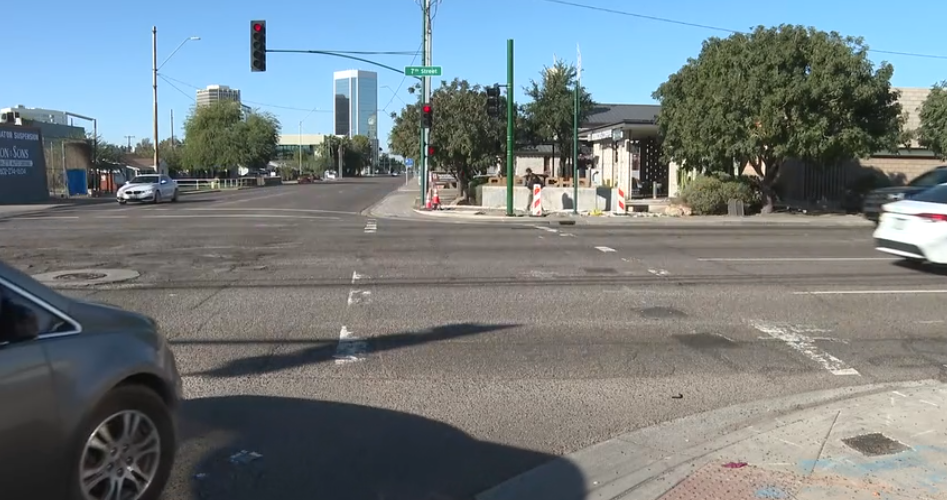
Out of Phoenix’s 6,389 crosswalks, 91 percent are made up of what are called transverse line crosswalks with two parallel white lines painted across the road. Many of them are worn and difficult to see, especially at busy intersections.
“It is a hazard for us as drivers and pedestrians,” Nicole Rodriguez with the Urban Phoenix Project said.
Rodriguez initially started the citizens' petition, which reached the city council last May. She says when crosswalks fade, drivers are more likely to stop inside them or fail to yield properly, and pedestrians are less likely to use them.
“We often see encroachment from drivers,” Rodriguez said. “This is just, in general, unacceptable.”
Over the last five years, an average of 267 pedestrians have died every year on Arizona roads. Behind each of those deaths is a family and a story.
In July, 65-year-old Libby Goff was out for a morning run when she was struck and killed in a crosswalk.
“The crosswalk light was on, the light was green, and the car turning left didn’t see her. And she was hit. And she was killed,” said her daughter, Chandra Goff.
Now, Chandra is speaking out, hoping her mother’s life, and death, can help prevent future tragedies.
“It doesn’t have to be this way. There’s a lot we can change about our traffic system,” she said.
Just before Thanksgiving, Phoenix’s Transportation Committee unanimously approved a sweeping plan to convert more than 5,000 crosswalks across the city to the more visible “ladder-style” design.
The U.S. Department of Transportation says these crosswalks can decrease pedestrian crashes by 40%. Right now, only nine percent of Phoenix crosswalks meet that higher safety standard.
“This is something that is going to help prevent a lot of incidents,” Rodriguez said.
City leaders expect the conversion to take at least seven years to complete.
“All of these are actually inexpensive in the grand scheme, and we should never really question what it takes to save a life,” Rodriguez said.
For families like the Goffs, the hope is that these changes come sooner rather than later.
“I hope that everyone doesn’t wait until a crash robs them of someone they love,” Chandra Goff said. “I hope they support the effort for safer streets now.”
The effort would increase Phoenix’s annual pavement marking budget, though final total costs are still being calculated.