

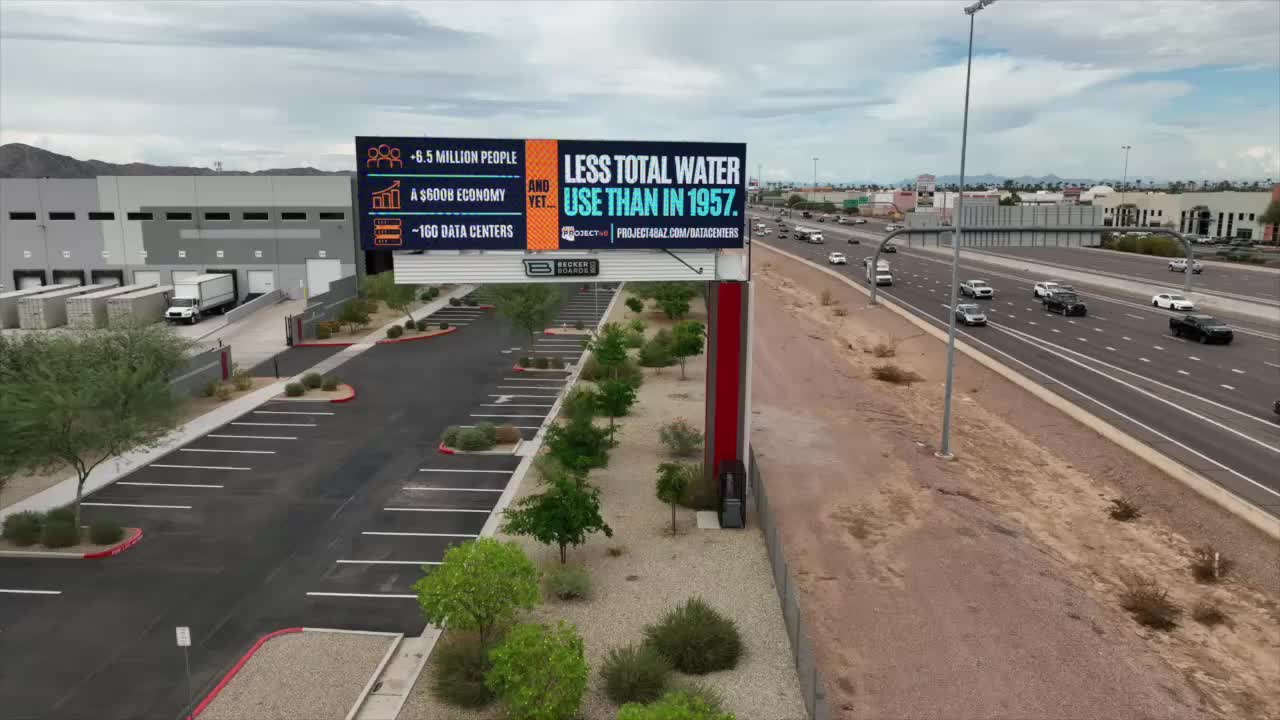


PHOENIX — A new billboard campaign is taking aim at some of the criticism surrounding Arizona's rapidly growing data center industry.
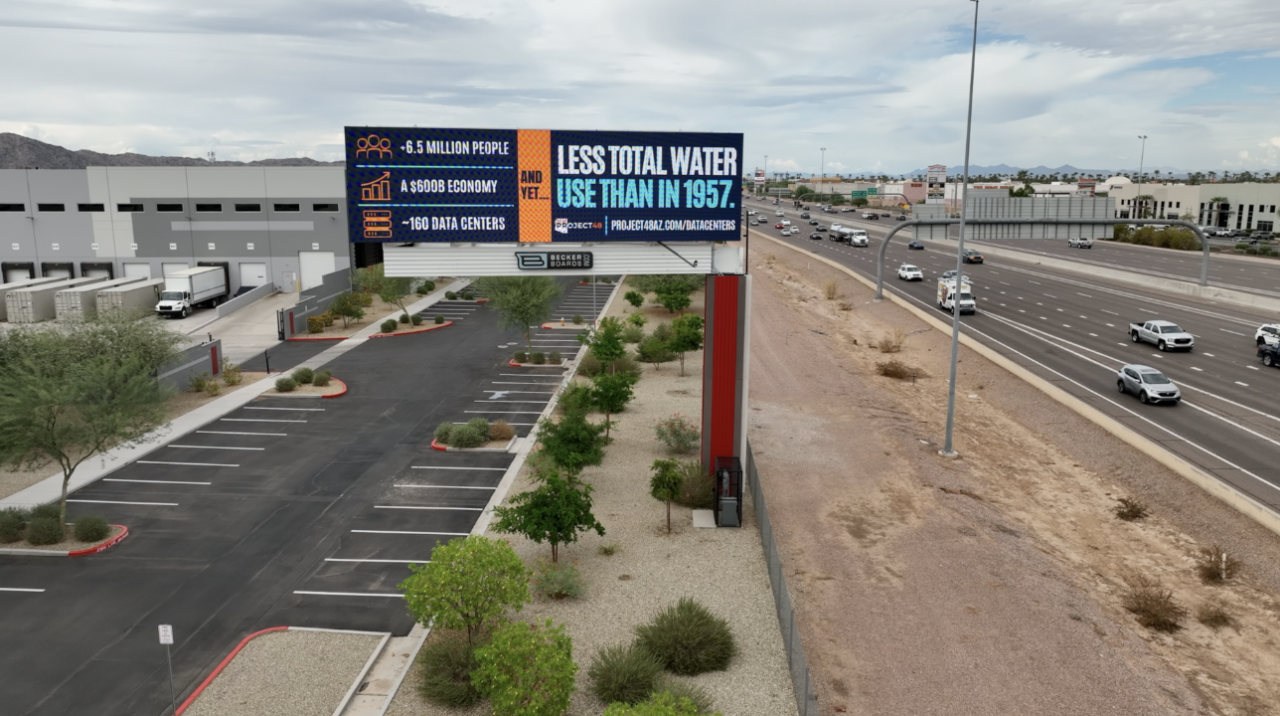
Project 48 Arizona, a nonprofit founded by Josh Heywood and former Maricopa County Recorder Stephen Richer, recently launched the campaign as part of an effort to highlight what the organization says are the economic benefits of data centers and provide information about their impact on water and electricity.
Heywood said Project 48 believes concerns need to be weighed against the economic benefits the industry brings to the state.
“In 2024, data centers provided over $1 billion in state and local tax revenue,” Heywood said. “They also provide jobs and investment. It's that same tech ecosystem that helped bring TSMC here, and they're a $265 billion investment.”
Heywood says that Project 48 is self-funded and that no money from data center companies was used to pay for the billboard campaign.
“We see people saying things that are not true, whether it’s about elections or data centers, and we want to push back on that,” Heywood said.
Water has become one of the biggest points of contention surrounding data center development in drought-stricken Arizona.

Project 48 points to research from Bluefield Research showing that data centers account for a small fraction of Arizona's overall water use.
“The data center behind us uses a closed-loop system,” Heywood said. “Recent research has shown that data centers only account for .15% of Arizona’s annual water use.”
Opponents say that broader impact needs to be considered when Arizona evaluates new projects.

“That doesn’t make it false that data centers do use a lot of water,” said Nathan Taylortaft with East Valley Unite, a group that has opposed data center development.
Taylortaft said his group's concerns extend beyond water and electricity. He argues the rapid expansion of artificial intelligence and the infrastructure needed to support it raises larger questions about who benefits from the development.

“We’re opposed to new developments that negatively benefits most people for the profits of the richest,” Taylortaft said.
That skepticism is not limited to organized opposition.
A Noble Predictive Insights poll found 57% of registered Arizona voters opposed construction of additional large data centers. Thirty percent supported additional development and 13% were unsure.
Despite that opposition, Project 48 is making the case that the facilities should remain part of Arizona's growing technology sector.
“We believe they bring jobs, investment, and should be welcome in Arizona,” Heywood said.
Project 48 has also launched an online data center dashboard and a hotline where Arizonans can submit questions about the industry as the debate over its future continues.
