

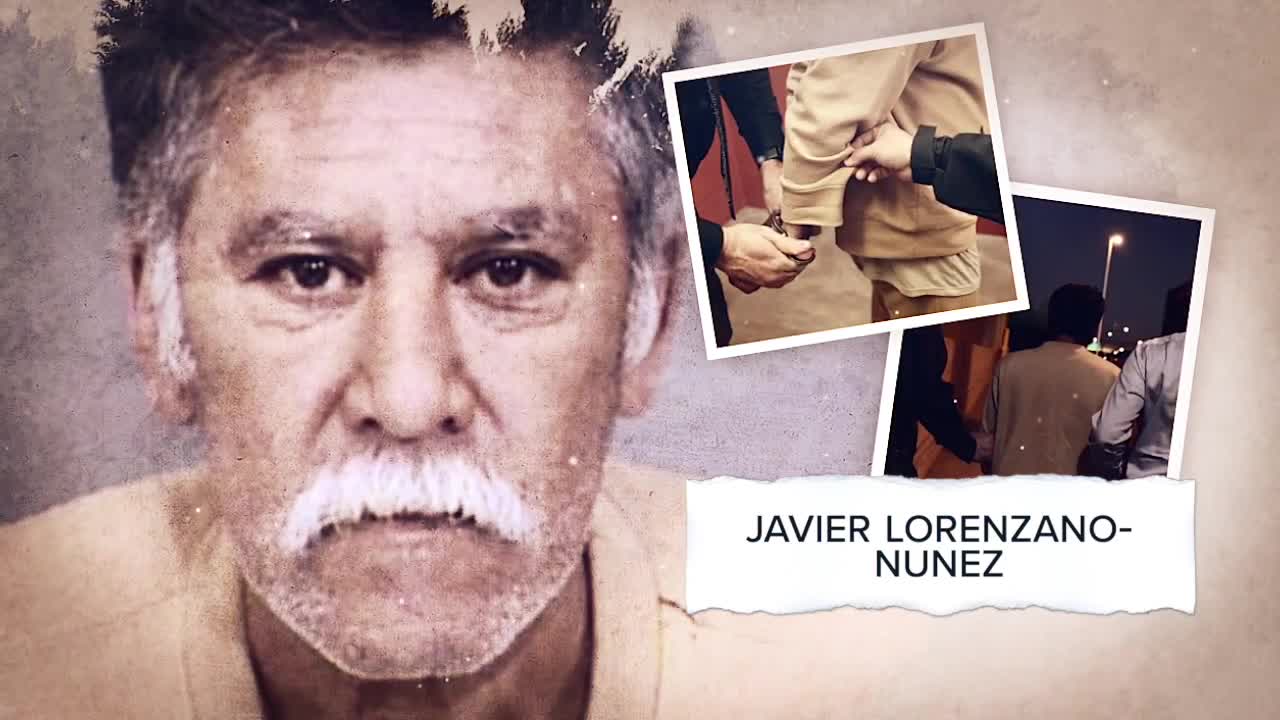


A Mexican man who spent nearly a year in jail after being wrongfully arrested for a 1998 Phoenix murder is threatening to sue Phoenix and Maricopa County unless officials agree to settle for $3 million.
An attorney for Javier Lorenzano-Nunez has filed a notice of claim against the City of Phoenix and the Maricopa County Attorney's Office, alleging gross negligence, false arrest, false imprisonment, negligent infliction of emotional distress, defamation and constitutional violations.
In 2024, Lorenzano-Nunez was arrested at his home in Tijuana, held for months in a Mexican prison, and extradited to Arizona after officials used facial recognition technology to connect him to the decades-old killing of 28-year-old Sarah Carr.
All charges were quietly dismissed less than a year later with forensic evidence, including DNA and fingerprints, excluding him, records show.
"I represent an individual who never should have been arrested," said civil rights attorney Danny Ortega, who filed the claim. "This was a look-alike case, which is not sufficient for an arrest or to keep a man in jail for a whole year."
The Phoenix police and the Maricopa County Attorney’s Office declined to comment on the claim.
In past statements, both agencies stood by how they handled the case.
1998 Murder Case
Sarah Carr was shot and killed on July 9, 1998, just before midnight at a house near 14th Street and McDowell Road following an argument. Witnesses identified a suspect named Gilbert Noel Sanchez Rosado, who fled and was never found.
Two decades later, investigators ran Rosado's old Arizona MVD photo through facial recognition databases operated by the Arizona Department of Public Safety and the FBI.
They received 250 possible matches and zeroed in on Lorenzano-Nunez's photo.
Phoenix police made a big deal about the arrest by putting out a press release and producing a special video featuring the victim's son, who had become a police officer in Texas.
Attorneys Allege Facial Recognition was Sole Basis for Arrest
According to the notice of claim and other case records, facial recognition appears to be the key evidence used to arrest Lorenzano Nunez.
"They just assumed, based on two photos, that my client was the person they had been looking for, for 25 years," Ortega said. "They were told by DPS, 'image comparisons are nonscientific and are intended for lead purposes only and should not be used as the sole basis for any decision.' They were told that.”
The claim also alleges other problems with the investigation, including a claim that police ignored a critical lead a decade earlier and forensic evidence showed Lorenzano-Nunez was not the murderer.

In 2007, the Puerto Rico Police Department contacted Phoenix police, informing them they had a man named Gilbert Noel Sanchez Rosado in custody with the same date of birth and social security number as the original suspect, records show.
Puerto Rico also requested a photograph and fingerprints.
"They did not act on it. That was the problem,” Ortega said. “They did nothing with the information that was given to them by the Puerto Rican authorities.”
Fingerprints ‘Excluded’ Suspect Before arrest
Perhaps most damaging to the case, the claim states Phoenix police knew Lorenzano-Nunez's fingerprints didn't match years before his arrest.
Lorenzano-Nunez was arrested in San Diego in 2011 and eventually deported to Mexico.
From that arrest, Phoenix obtained his fingerprints and a detective submitted them for testing, records show.
The results excluded Lorenzano-Nunez on two latent prints and were inconclusive on two others.
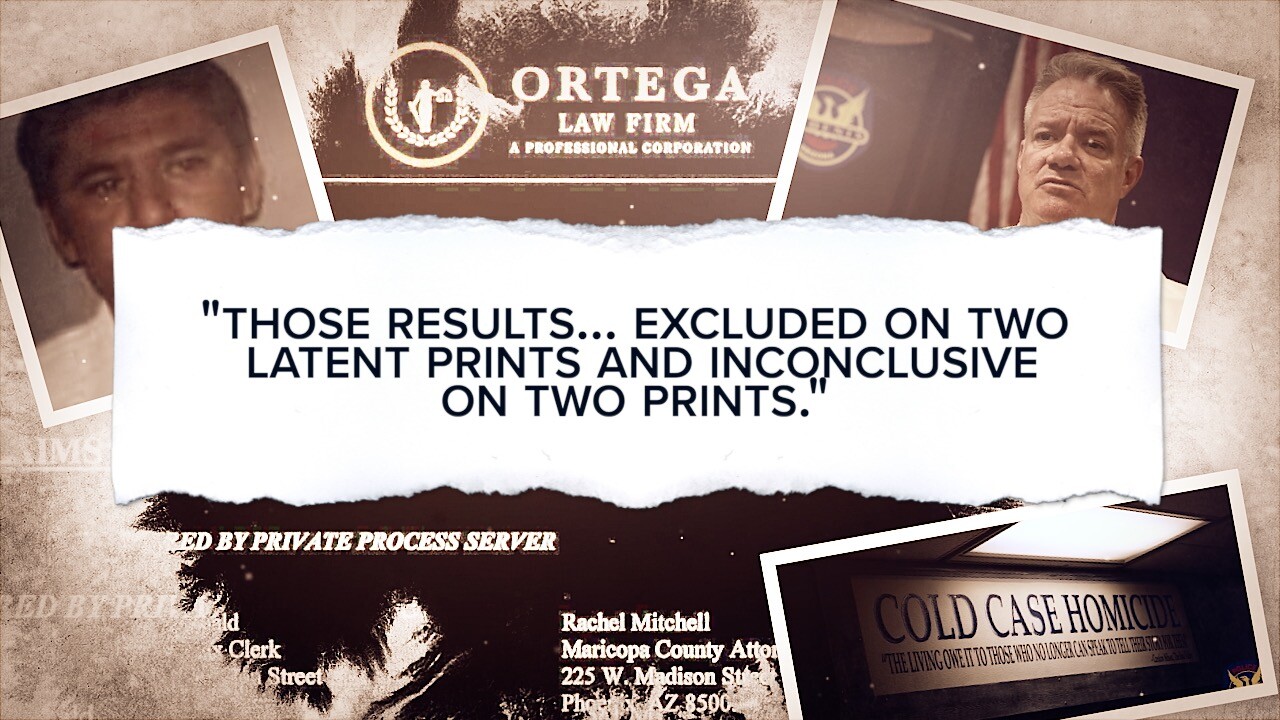
The fingerprint analysis was completed in 2017, which was seven years before Lorenzano Nunez was arrested.
"They had evidence that it wasn't my client. That's the bottom line here," Ortega said. "He was excluded in just about everything else they did, except this nonscientific facial recognition. Seems to me here we're looking at racial recognition instead of facial recognition."
The claim also highlights how the court found Phoenix’s cold case detective, Dominick Roestenberg, misled a grand jury to first obtain the indictment against Lorenzano-Nunez.
Additional Questions
The murder victim's son, Garrett Miller, became a police officer in Texas.
He was flown in for the bust, and Phoenix police used Miller’s handcuffs during the arrest. He was also interviewed for the city’s special video on the cse.
"I think that this was a cold case that they wanted to show as being solved,” Ortega said. “Can we connect that police connection to this? That's a question we have to ask them.”
ABC15 previously interviewed Miller about how the case was dismissed.
He said the decision was frustrating for family members, and they still believe Phoenix arrested the right man.
Lorenzano Nunez spent months in a Mexican prison awaiting extradition, which was followed by months more in Maricopa County Jail.
This digital article was produced with the assistance of AI and converted to this platform based on the broadcast story written and reported by ABC15 Chief Investigator Dave Biscobing (Dave@abc15.com). Our editorial team verifies all reporting on all platforms for fairness and accuracy.
