



Less than a year after Phoenix police touted an arrest in a cold case murder, prosecutors quietly dropped charges against a Mexican man who defense attorneys claim was the victim of a botched investigation driven by facial recognition technology.
The court officially dismissed the first-degree murder charge against Javier Lorenzano-Nunez on August 5, 2025.
The case fell apart just 10 months after his high-profile arrest.
The Phoenix Police Department and the Maricopa County Attorney’s Office did not agree to interviews to discuss the case and would not state whether they believed investigators targeted, arrested, and charged the wrong man.
But in emailed statements, the agencies stood by their case.
‘The Phoenix Police Department remains steadfast in its commitment to seeking justice for victims who cannot speak for themselves… This case remains open, and we are unwavering in our commitment to securing justice for (the victim) and her family,” a city spokesperson wrote.

With the case now dismissed, the fallout leaves uncertainty and questions for the victim’s family and civil rights experts.
“We think (facial recognition) technology is really dangerous in police hands, because of how it can lead to arrests of innocent people,” said Nate Freed Wessler, a deputy director with the ACLU’s Speech, Privacy, and Technology Project.
Garrett Miller, the victim’s son who’s now a police officer in Texas, told ABC15 in a remote interview that the case’s dismissal has been difficult.
“When I told my family, it was kind of really heartbreaking for them,” Miller said. “They just kind of felt like it was, for lack of better words, kind of almost like a lost cause, like we did all this work, and now we’re back to square one.”
He added, “I believe it's him. My family believes it's him. The detective believes it's him.”
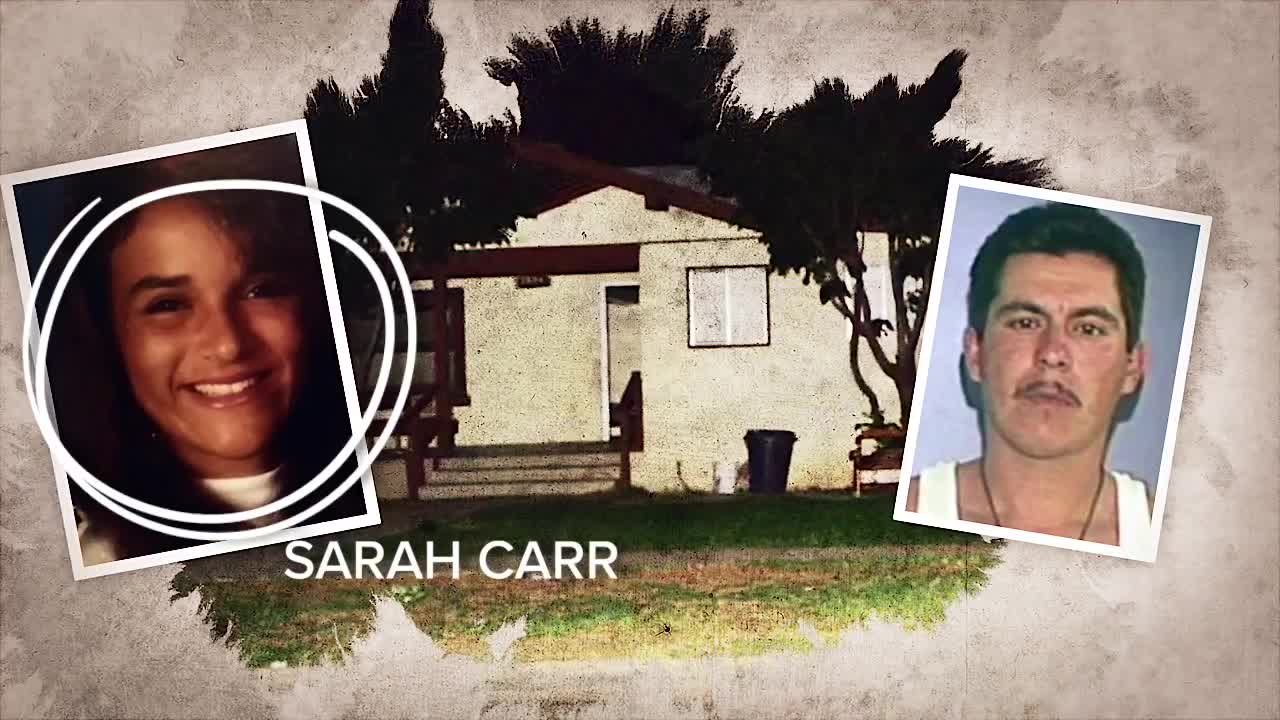
Miller’s mother, Sarah Carr, was murdered in 1998.
She and another woman went to a Phoenix home for drugs, court records show. The deal went bad, and a man shot Carr in the face with a shotgun. At the time, witnesses identified the shooter as Gilbert Noel Sanchez Rosado through his state motor vehicle division photo.
Detectives also found that Sanchez Rosado lived at the home, where they found documents and a vehicle registered to his name, records show.
But the suspect fled and investigators couldn’t find him.
But in 2024, Phoenix police announced in a press release and special public relations video that they had finally solved the murder due to some “new technology” and their “incredible work ethic.”
Court records show that the new technology was facial recognition software used by the Arizona Department of Public Safety and the FBI.
Investigators used the technology to run Gilbert Noel Sanchez Rosado’s 1998 MVD photo through state and federal databases.
Officials got a combined 250 possible matches and zeroed in on a photo of Lorenzano-Nunez in 2011, when he had been arrested in San Diego and then deported back to Mexico.
Phoenix police and county prosecutors allege that Javier Lorenzano-Nunez and Gilbert Noel Sanchez Rosado are aliases for the same man.
But in court filings, defense attorneys, who declined to comment, highlighted multiple problems with the investigation and prosecution.
Most notably, investigators couldn’t find any ties for Lorenzano-Nunez to Arizona, and he was excluded by all forensic evidence that was tested, including DNA, fingerprints, and a handwriting analysis, according to multiple defense motions.
The defense also alleged that Phoenix police and county prosecutors had no proof that Sanchez Rosado and Lorenzano-Nunez are names for the same person.
“The name Gilbert Noel Sanchez Rosado is only listed as an alias of Javier Lorenzano-Nunez because it was added by the Phoenix Police Department and the Maricopa County Attorney’s Office as a result of this investigation,” according to a defense filing.
In an order remanding the case back for new charges, a judge also ruled that Phoenix’s cold case detective, Dominick Roestenberg, gave misleading testimony to a grand jury to first secure the indictment against Lorenzano-Nunez.
Roestenberg did not tell jurors that investigators used facial recognition technology, records show. He also did not tell the grandy jury about how witnesses had identified a photo of Gilbert Noel Sanchez Rosado, and not Javier Lorenzano-Nunez.
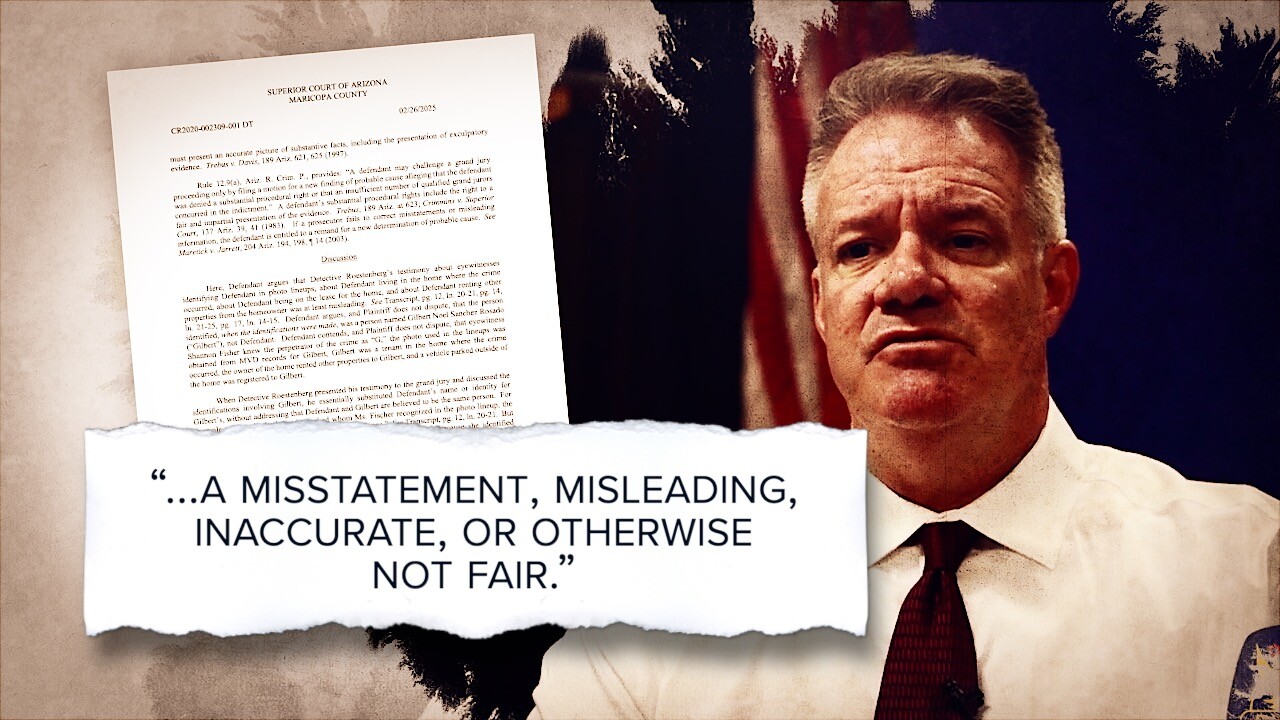
In Phoenix’s emailed statement for this report, the police department acknowledged the case was remanded to the grand jury but then falsely claimed it was “not due to any misleading or inaccurate information provided by our detective.”
The ACLU said the available court records in this case raise serious questions about how Arizona officials are using facial recognition technology.
“We have now seen a number of wrongful arrests around the country where police put a photo of a suspect into a facial recognition technology system, chose a result on the other end that turned out to be totally incorrect, an innocent person,” Wessler said.

ABC15 is committed to finding the answers you need and holding those accountable.
Submit your news tip to Investigators@abc15.com
He said the technology gets it wrong often and has led to false arrests in at least ten cases nationally -- Lorenzano-Nunez’s case could be number 11.
Wessler also said using the technology has been banned by officials in about 20 jurisdictions, including other major cities like Boston and San Francisco.
“This technology gets it wrong in all kinds of cases,” Wessler said. “But it reliably gets it wrong more often when used on people of color, darker skin people, and younger and older people, and women.”
The Phoenix Police Department and Maricopa County Attorney’s Office said they do not plan to change how they use the technology based on what happened in this case.
“Law enforcement may use it in an investigation, and we would evaluate that evidence as we do all evidence. It is not used to prove a case,” an MCAO spokesperson wrote in an email. “It can be a valuable investigative tool.”
When prosecutors dismissed the charges, they wrote it was in the “interests of justice.” A spokesperson later emailed ABC15 that “additional evidence developed since he arrived in the US drew into question our ability to prove his guilt beyond a reasonable doubt.”

Lorenzano-Nunez was initially arrested in Tijuana and then held in a Mexican prison for months while officials worked to extradite him to Arizona.
Now that the case is over, he has returned to his home in Mexico, sources said.
ABC15 also learned that he has spoken to local civil rights attorneys and is exploring whether to file a lawsuit against Phoenix police and the county attorney’s office.
As for the victim’s family, they realize now the case may never be solved. It’s a hard emotional shift after they believed the case was finally solved less than a year earlier.
“I got to see him get off the plane. He was escorted in handcuffs,” said Garrett Miller, the victim’s son, who was flown in for the arrest and interviewed in Phoenix’s video. “I got to see the detective put the pair of handcuffs I brought on him. I got to see him get hauled off in a police car. I got to sit and watch the interview.”
As a police officer, Miller said he understands the reality of the justice system and why prosecutors dropped the case. While he believes police still had the right man, the whole situation now leaves a lot of doubt.
“Is there a possibility it could be somebody else? Absolutely,” he said when asked by ABC15 if he’s worried about whether investigators targeted the wrong guy. “Because there was a couple people in the house that night, could have been the other person? Sure.”
Miller adding, “If it comes to light, then that's not the guy, then I will eat my words and apologize to him and everybody involved.”
Contact ABC15 Chief Investigator Dave Biscobing at dave@abc15.com.
