


Grand Canyon Private Academy is the sponsor of Safe Splash.
Drowning Prevention and the Hidden Danger of Floaties
How these Swimming Aids Can Increase the Risks of Accidental Drowning
(March 4, 2025 – PHOENIX) According to the Centers for Disease Control (CDC), drowning is the leading cause of death for children one to four years old, and the second leading cause of death for children five to 14 years old. Many parents believe using floaties or water wings is a water safety strategy in the pool or at the beach. In actuality, these swimming aids increase the risk of accidental drowning in children.
“In the drowning prevention community, we dread hearing the other f-word: floaties,” said Lisa Zarda, Executive Director of the U.S. Swim School Association. “Floaties are not a substitute for swimming lessons. These seemingly harmless tools can give responsible parents a false sense of security with the assumption that the inflatables will keep their kids safe and help teach them to swim. But in reality, consistent floatie use actually increases the risks of accidental drowning.”
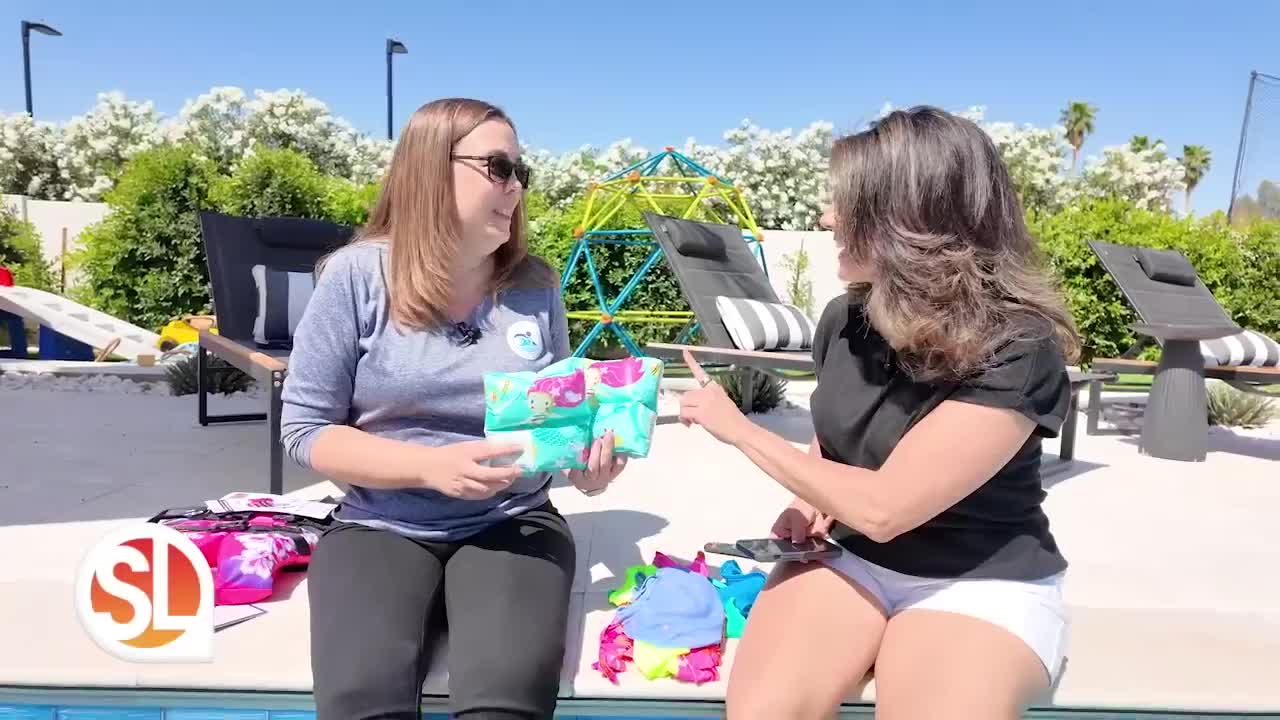
As the swim season approaches, it is critical to bring attention to the many safety issues associated with floatie use. While floaties can keep a child’s upper body afloat, they do not support the lower body. This imbalance can cause a child to tip forward and submerge their face in the water. This is particularly dangerous for young swimmers who may not have the instincts to lift their heads. Floaties prevent a horizontal position essential for effective swimming techniques.
Children who wear floaties may become overconfident in their swimming abilities and take unnecessary risks. Floaties can also easily slip off or become deflated without warning. An ill-fitting floaty or one that suddenly loses air can leave a child vulnerable in the water.
Floaties also hinder the natural movement of children in the water. These devices often limit a swimmer’s range of motion, making it difficult for children to learn proper swimming techniques.
The best way to prevent accidental drowning is to attend formal swimming lessons. Research shows that accidental drownings can be decreased by 88% with just one swimming lesson. Swim lessons provide safety skills and proper swimming techniques essential for keeping children safe in the water.
When using floaties, parents may assume their child is safe in the water, which can lead to less supervision. Parents should not rely on lifeguards or assume someone else will spot a potential crisis around water. Nine out of 10 drowning deaths occur when a caregiver is supervising but not fully paying attention. For ultimate safety, parents should always designate an adult “water watcher” whose sole purpose is to keep a close eye on kids while they are in the water.
“Drowning can happen in seconds and is often silent, but it is also preventable,” Zarda added. “Now is the perfect time to enroll your children in swimming lessons before the summer swim season is underway. It’s also a great time for parents to consider taking adult swimming lessons. Improving your swimming skills and comfort in the water can save a life. It's never too late to learn to swim.”
If parents feel the need to use a floatation device while in water, they should make sure it is a properly fitting Coast Guard-approved life jacket. Additionally, children should be encouraged to experience swim time without the floatation device with close adult supervision.
Currently, there are more than 25 U.S. Swim School Association-member swim schools in Metro Phoenix.
Visit the U.S. Swim School Association’s website at usswimschools.org/find-a-school for a comprehensive list of schools that offer swim lessons in your area. The U.S. Swim School Association’s network of trusted swimming schools can help children of all ages develop confidence and competence in the water, ensuring they have a fun and safe swimming experience all summer long.
