

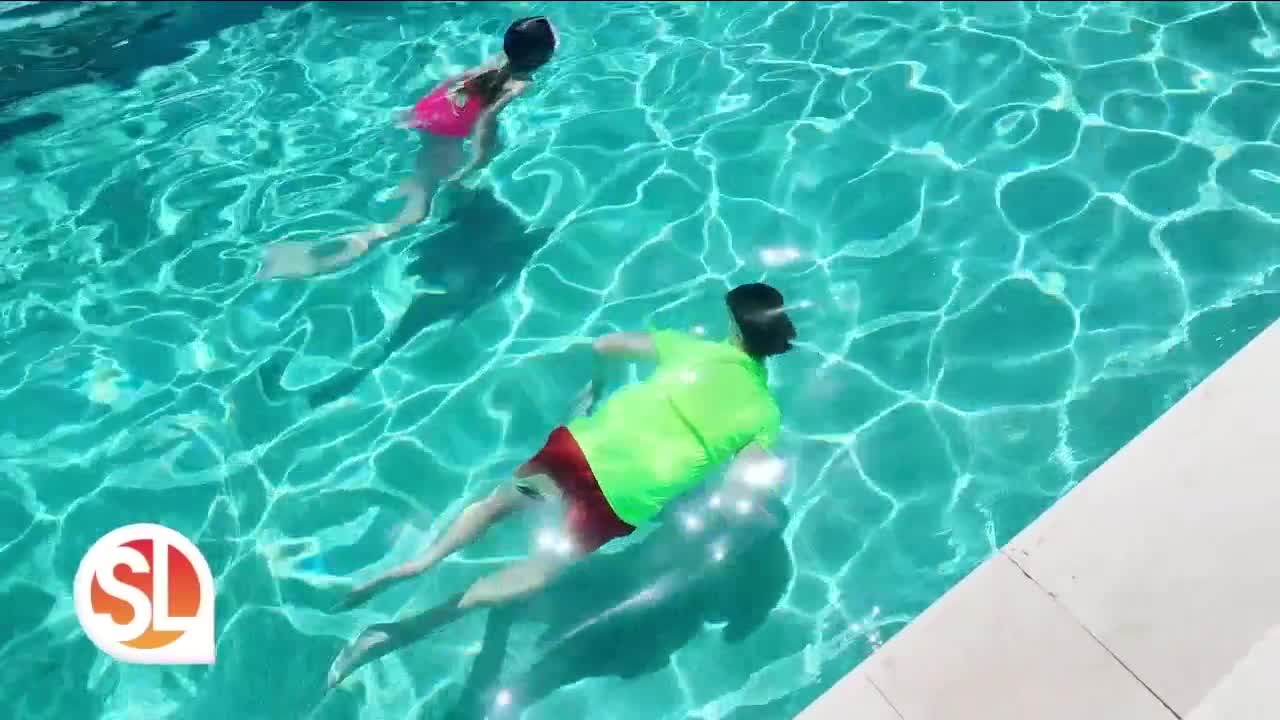

Which Swimsuit Colors Can Help Reduce Drowning Risks and Which to Avoid
As temperatures rise in the Valley and Arizona families prepare for summer, there’s one life-saving detail that most parents overlook when buying kids’ swimwear: the color. It may seem like just a fashion choice, but experts say your child’s swimsuit color can have a direct impact on whether they are seen in the pool – or not.
According to the Centers for Disease Control and Prevention (CDC), drowning is the leading cause of death for children aged 1–4 and the second leading cause for children aged 5-14. There are more than 4,500 drowning deaths in the U.S. annually and roughly 8,000 non-fatal drownings.
“Drowning is often silent and happens quickly, so visibility means everything when your child is in or around water,” said Lisa Zarda, Executive Director of the U.S. Swim School Association. “Not all swimsuit colors are created equal when it comes to visibility underwater. In fact, some of the most popular colors can make a child nearly invisible within seconds of getting into the pool.”
According to Zarda, the best swimsuit colors for safety are neon yellow, bright orange, neon green and bright pink. These colors have the highest visibility in pools, lakes and oceans, and consistently rank highest in safety testing. Bright, high-contrast neon colors can give parents and lifeguards precious extra seconds to see a child in the water. They are also able to be seen at a distance, in low light and in choppy or murky waters.
“Parents spend a lot of time picking cute swimsuits each year, but the safest choice might be the brightest one,” said Zarda. “In an emergency, color can mean the difference between spotting your child in seconds or not at all while they are in the water.”
Safety experts say the worst swimsuit colors to buy are all shades of blue because they blend into water and essentially disappear in the pool. Additionally, white suits are discouraged because the color reflects light, mimics glare and is difficult to track beneath the surface. Experts also suggest avoiding dark grey and black because these colors are hard to distinguish at the bottom of a pool or lake, often looking like debris, dirt or leaves.
“When you think about it, safety vests are usually neon yellow and traffic cones are typically bright orange, these are designed to be highly noticeable when there is a lot of activity,” said Zarda. “The same principle applies to your kids' swimsuits. The color of the swimsuit can make it easier to track your child in and around water, especially if they get into trouble.”
Zarda emphasizes that swimsuit color is not a substitute for supervision, formal swim lessons or physical barriers around a pool, but simply a low-cost layer of protection that can improve response time in an emergency.
Visit the U.S. Swim School Association’s website at https://usswimschools.org/find-a-school for a comprehensive list of schools that offer swim lessons in your area. The U.S. Swim School Association’s network of trusted swimming schools can help children of all ages develop confidence and competence in the water, ensuring they have a fun and safe swimming experience all summer long.
To learn more about swim schools in your area, visit USSWIMSCHOOLS.org. To learn more about Grand Canyon Private Academy visit gcpa.k12.com
