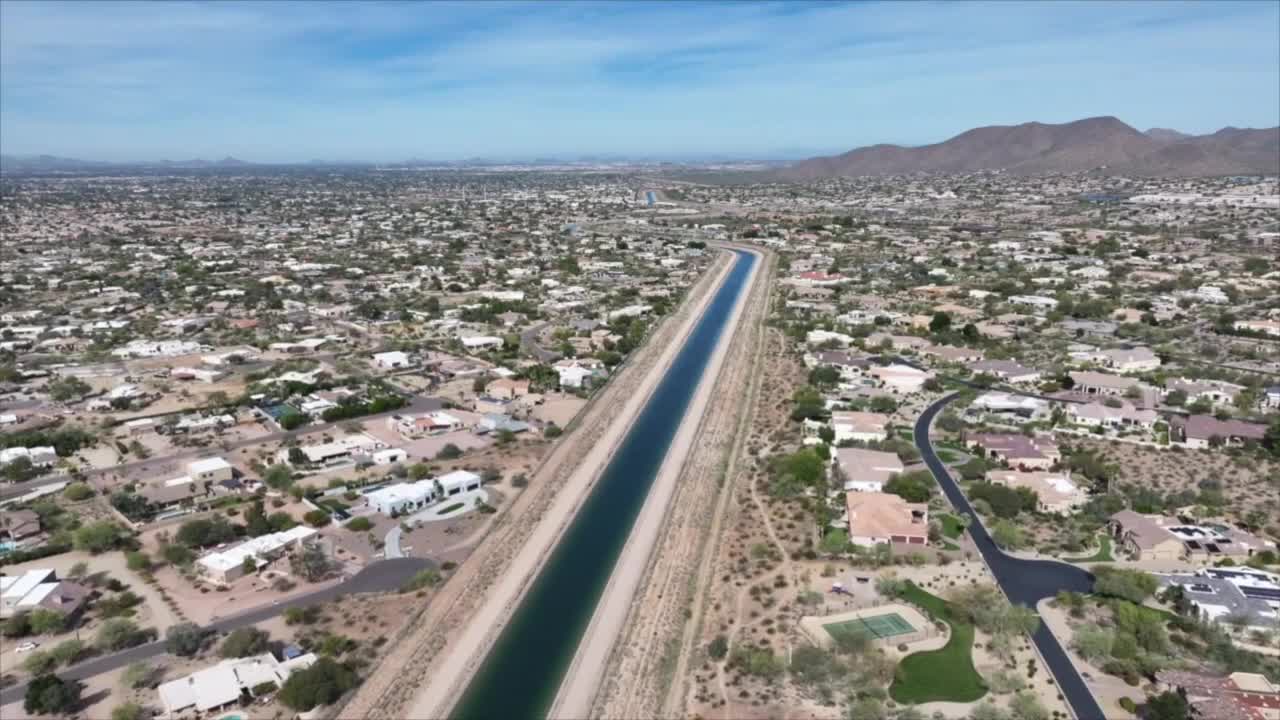


PHOENIX — After years of negotiations, Arizona still doesn’t know what its long-term water future will look like, and now the federal government is preparing to step in.
States across the Colorado River Basin have failed to reach a deal on how to share the shrinking river after current operating rules expire in 2026. With no state-led agreement in place, federal officials are moving forward with their own plan, one that could bring steep cuts to Arizona’s water supply.
And for Arizonans, the clock is ticking to weigh in. Public comment remains open until March 2. To submit your comment on what the government should do, send your comments in email to crbpost2026@usbr.gov.
Additional information is available online. The project website can be accessed here, along with links to YouTube videos published by the government, recorded in January and February which walk through of the options available.

Do you have a concern in your community or a news tip? We want to hear from you!
Connect with us: share@abc15.com
Many Arizona leaders have already offered their public comments, which are overwhelmingly negative.
“We were very disappointed with that document,” said Brenda Burman, the Central Arizona Project General Manager “If any of those alternatives were implemented, it would be very difficult, and perhaps devastating for Arizona.”
Arizona’s top Colorado River negotiator, Tom Buschatzke, echoed those concerns.
“None of those alternatives are very good for the state of Arizona,” Buschatzke said. “I’m not seeing how we're going to break that stalemate."
Congressman Juan Ciscomani also criticized the proposals, saying the impacts of Colorado River cuts extends into Pinal, and Pima counties.
“That’s not an acceptable solution for us,” Ciscomani said. “We want to play ball, but we want to make sure everyone across the board uses less and becomes more efficient.”
Some of the federal alternatives would reduce Arizona’s Colorado River supply by 40%, 50%, or in the most extreme case up to 70%.
Experts at ASU Kyl Center for Water Policy say part of the problem lies upstream.
“The reason for this current impasse is because the upper basin states have refused to take cuts in their Colorado River use,” said Sarah Porter, the center’s director.
Upper Basin states like Colorado and Utah rely on different water rules than Arizona and other Lower Basin states, complicating negotiations that have dragged on for years.
Arizona has already been living with cuts for several years. Since 2021, the state has faced an 18% reduction in Colorado River water deliveries due to a Tier 1 shortage declaration. Most of those cuts have fallen on Central Arizona Project users, including agriculture and some tribal communities.
Buschatzke argues that pushing Arizona into deeper reductions would violate long-standing Western water law.
“We will be protecting the state of Arizona,” he said. “And if that has to be litigation, it will be litigation.”
That means a lawsuit against the federal government, or upper basin states is now a real possibility if the final plan moves forward unchanged. The state legislature has put $3 million in a state fund for potential litigation on the Colorado River.
After the comment period closes, the federal government is required to review public feedback and issue a formal ‘Record of Decision’, likely sometime this summer. Advocacy groups say public feedback matters.
“I just encourage Arizonans to look at this document, understand what that means for your family, your businesses, and what it means for the future,” said Kyle Roerink of the Great Basin Water Network. “Then figure out if you want to advocate for one scenario over another.”
A new operating plan must be in place by October 1, setting the rules for how the Colorado River will be managed for years to come, and shaping Arizona’s water future in the process.
This story was reported on-air by a journalist and has been converted to this platform with the assistance of AI. Our editorial team verifies all reporting on all platforms for fairness and accuracy.
Want more news in your community? Add ABC15 as a preferred source on Google below: