

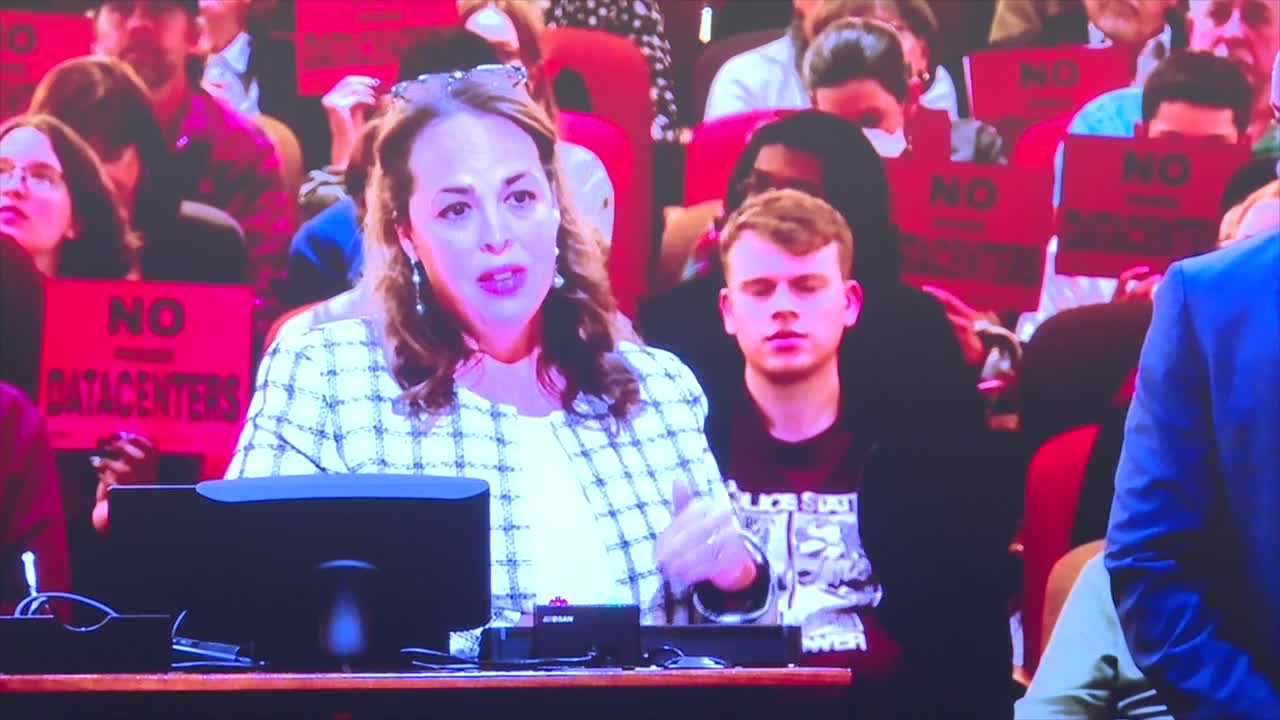


CHANDLER, AZ — The Chandler City Council unanimously rejected to rezone 10 acres of land for a proposed new data center at their meeting Thursday night.
The project has generated significant public interest, especially after former Arizona Senator Kyrsten Sinema spoke in favor of the project at an October Planning and Zoning Committee hearing.
Ahead of the vote, Chandler residents balanced the necessity for data centers in modern life, as well as the impacts they have on the environment and communities where they are built.
“Every credit card transaction you do, every time you use an app, I know that’s going through a data center,” Emily Anderson said.
Representatives for the project have said the planned facility would use a closed-loop cooling system, a method they argue requires significantly less water than traditional evaporative cooling.
“This new way of cooling doesn’t use the same amount of water that the others do,” a project representative said during October’s meeting.
However, experts caution that water usage goes beyond what happens at the site itself. Kirsten James, who studies data-center water consumption, says communities must consider all of the impacts of growth.
“We have to look beyond just the four walls of the data centers, with the water use associated with the electricity generation,” James said. “We need to look at the full picture.”
Beyond water, as Arizona continues to attract data-center and semiconductor development, utilities are preparing for massive increases in electricity demand.
APS says that if every proposed data center moves forward, the utility would need to more than double its current service capacity.
“We have anywhere from 4–500 megawatts of data center load online,” said Patrick Bogle, APS Data Center Strategist. “That’s equivalent to 4–500 big box stores.”
Despite the challenges, Valley technology leaders say continued data-center expansion pushes Arizona’s innovation ecosystem forward.
“As they come in, we innovate further, which not only benefits that data center or semiconductor project, but then benefits the entire community,” said Arizona AI entrepreneur Andrew Bart.
