

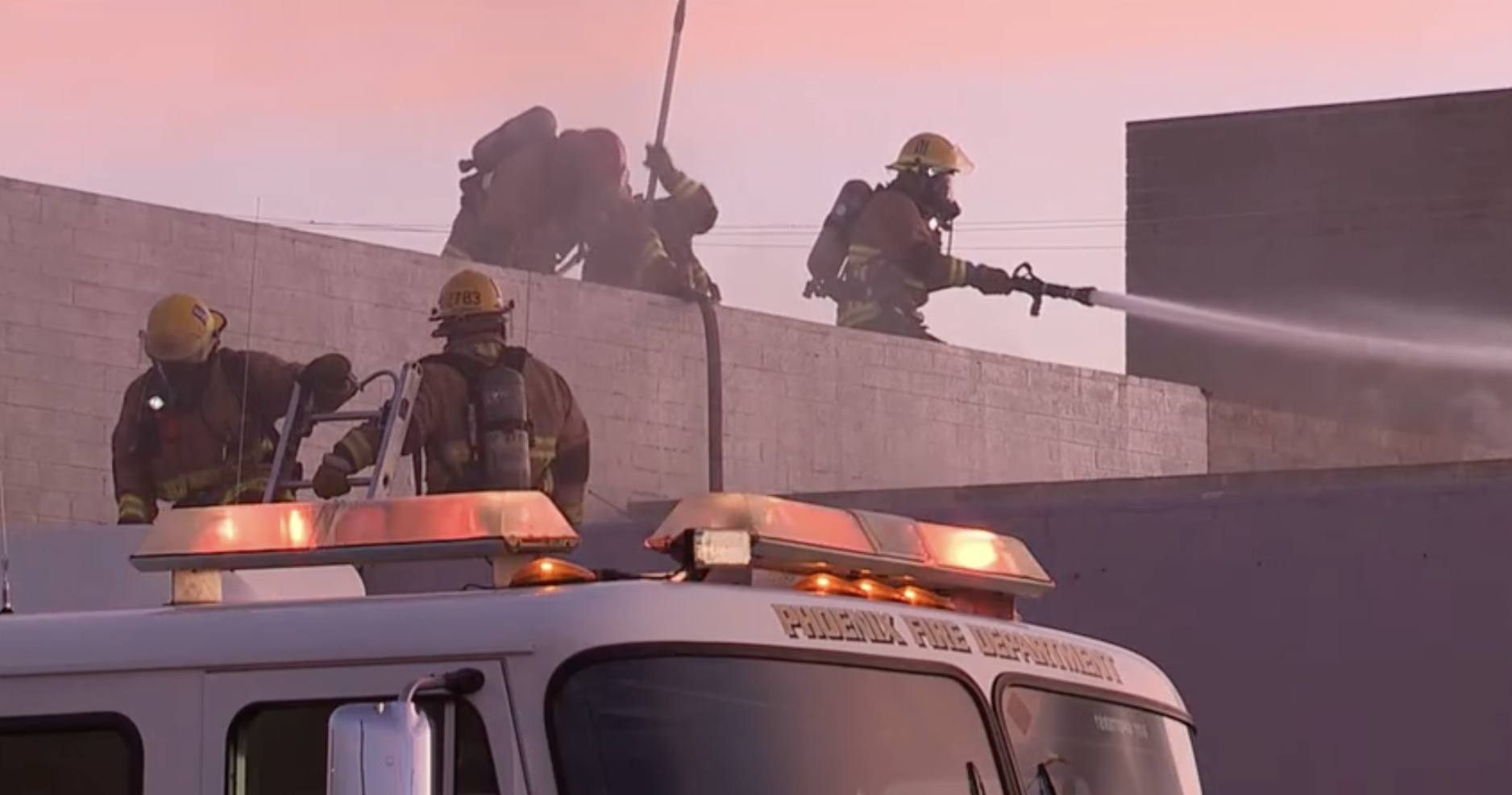


PHOENIX — Two Republican lawmakers have introduced bills to correct what firefighters say is a missing comma that’s allowing insurance companies to deny workers’ compensation claims for some cancers.
The legislation comes after ABC15 exposed the issue in December, revealing how firefighters say this punctuation error is creating a loophole that’s making them fight for their benefits.
Sen. Kevin Payne (R-District 27) and Rep. Walt Blackman (R-District 7) are sponsoring bills to clarify Arizona law, which says certain cancers are presumed to be work-related for firefighters and covered under workers’ compensation.
The problem centers on how the law lists adenocarcinoma as a covered cancer. The statute lacks a comma after the word “adenocarcinoma” and before the phrase “or mesothelioma of the respiratory tract.” ABC15 has reported that some insurance companies are denying claims, arguing that only adenocarcinoma of the respiratory tract is covered.
The bills clarify that adenocarcinoma is a stand-alone cancer covered under the state’s presumptive cancer law for firefighters, regardless of where it develops in a firefighter’s body.
The bills go beyond adding a comma. Lawmakers are proposing placing a period after the word “adenocarcinoma” to remove any doubt.
“We’re just making it more clear,” Payne told ABC15.
Payne’s bill is Senate Bill 1215. Blackman’s is House Bill 2231.
ABC15 brought this issue to light in December, highlighting how the missing punctuation mark was creating uncertainty for firefighters who develop cancer and apply for workers’ compensation coverage.

ABC15 is committed to finding the answers you need and holding those accountable.
Submit your news tip to Investigators@abc15.com
Matt O’Reilly, a Sun City firefighter with a decade of service, fought for more than a year to get his cancer claim covered under workers’ compensation.
“You don’t want to think about money when you’re thinking about your life,” he told ABC15.
Dan Freiberg, president of the Professional Fire Fighters of Arizona, said O’Reilly isn’t alone. Freiberg said he is aware of “at least three or four” similar denials where firefighters had to fight for coverage because of the punctuation problem.
“It's so obvious, right? We need that to be fixed,” he said.
The proposed fix in the law might seem small. But for firefighters who are diagnosed with cancer, the lack of a comma could make the difference in whether they get workers’ compensation. Under workers’ comp, they can receive benefits for medical care, lost wages, disability and death benefits for their dependents.
Paul Boyer, a former Arizona lawmaker who sponsored legislation a few years ago that expanded cancer coverage for firefighters, said the intent was to have adenocarcinoma as a stand-alone cancer in the law.
The Industrial Commission of Arizona, the state agency that oversees workers’ compensation claims, issued an advisory policy statement in January 2025, advising insurance carriers that:
“Adenocarcinoma, as applied within the scope of workers’ compensation claims, shall be interpreted as a standalone condition and does not need to be 'of the respiratory tract' to qualify under the workers’ compensation statutes.”
Despite that advisory, O’Reilly’s workers’ comp claim continued to be denied for months until last November, when the insurance company reversed its decision. He has since recovered and is back at work.
Senate Bill 1215 passed out of the Senate Finance Committee with a 6-1 vote on Feb. 2.
Sen. Payne is calling the legislation “ the comma bill.” Instead of listing the cancers covered by worker’s compensation in a paragraph, Payne’s legislation instead lists the cancers in a single column, thereby eliminating the need for punctuation.
The bill has the support of the Professional Fire Fighters of Arizona, a union that advocates on behalf of firefighters.
Tom Caretto, executive vice president of the Professional Fire Fighters of Arizona, said the change is designed to ensure denials of workers’ compensation don’t happen when a firefighter is diagnosed with adenocarcinoma.
“It’s just turning it into a list, instead of a paragraph form, to make it clear what we are covering,” he told lawmakers.
Email ABC15 Investigator Anne Ryman at anne.ryman@abc15.com, call her at 602-685-6345, or connect on X.
