

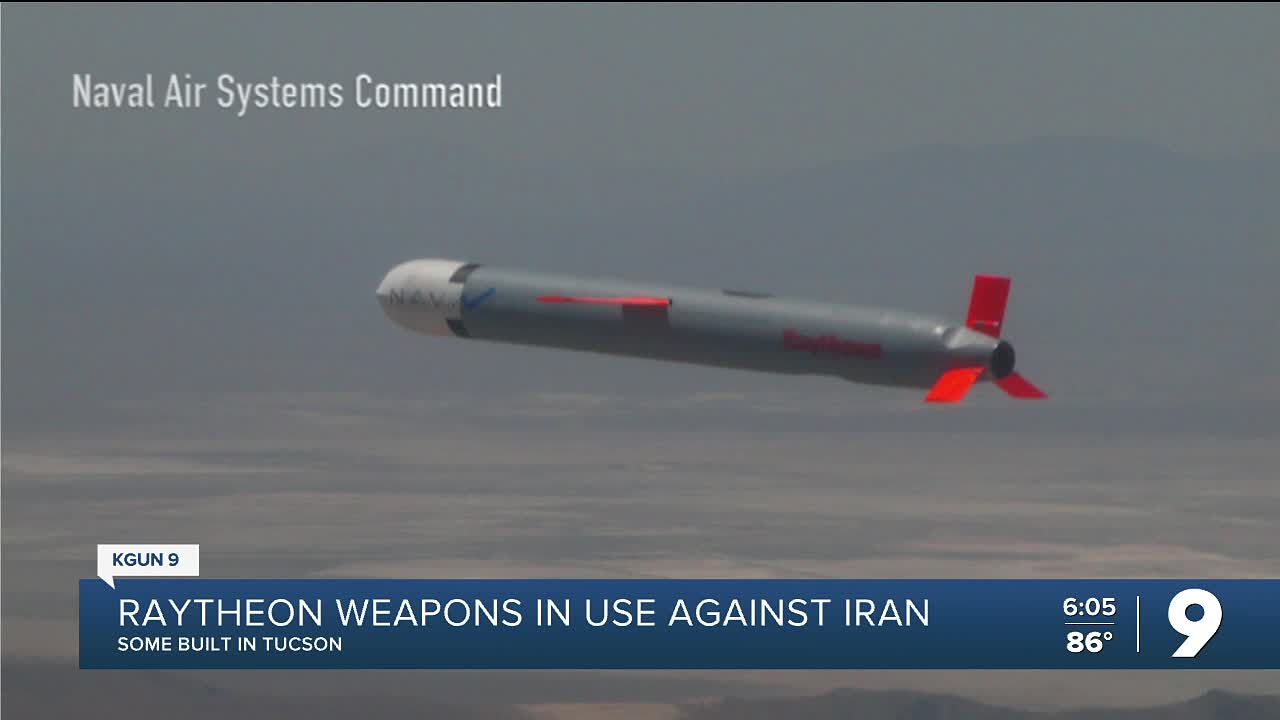


TUCSON, AZ — A lot of the weapons being used against Iran were built in Tucson. The University of Arizona says Raytheon employs about 13,000 people in the Tucson area, and adds about $2.6 billion to the local economy.
Raytheon dates to the 1920s. It pioneered parts that made radios common in American homes. It’s been a major player in defense since the beginning of World War II, when it was the main supplier of a key part of early radar systems.
Since then, it has grown to be the third-largest defense contractor, and it makes the weapon that the government often uses first.
Tomahawk Cruise missiles launching from US warships are often some of the first images we see when the US launches an attack. The Tomahawk’s ability to strike with precision from as far as a thousand miles away without putting a pilot in danger has made it the Pentagon’s go-to weapon since the 1991 Gulf War.
Once a rocket booster pushes it out of the launch tube, the Tomahawk levels out and flies like a plane to its target. The newest models do not need a designated target when they launch. They can circle and send back images while a remote operator looks for something to hit.
Raytheon says more than 2,300 Tomahawks have been fired in military operations—not counting Tomahawks fired in this latest operation against Iran.
The Navy leans so heavily on the Tomahawk that defense planners worry the US is burning up too much of its reserves. Just last month, Raytheon announced an agreement with the government to produce a thousand additional Tomahawks. The Pentagon says the cost is about $1.3 million per missile.
Most of the planes flying over Iran would carry Raytheon AMRAAM missiles to defend themselves. Raytheon says they are the most widely used air-to-air missiles in the world.
Raytheon makes the Patriot missile system used to defend US air bases and other assets in the region.
If Iran threatens US warships in the region, other Raytheon products could come into play.
Raytheon supplies many of the radars on Navy ships.
Raytheon’s SM-3 and SM-6 missiles can intercept missiles on the edge of space if required.
If a ship is threatened, Navy crews can use the evolved Sea Sparrow missile or the Rolling Airframe Missile.
Any flying threat that makes it through longer-range defenses will face the Raytheon CIWS, for Close-In Weapons System. It can track a target and fill the sky with bullets.
